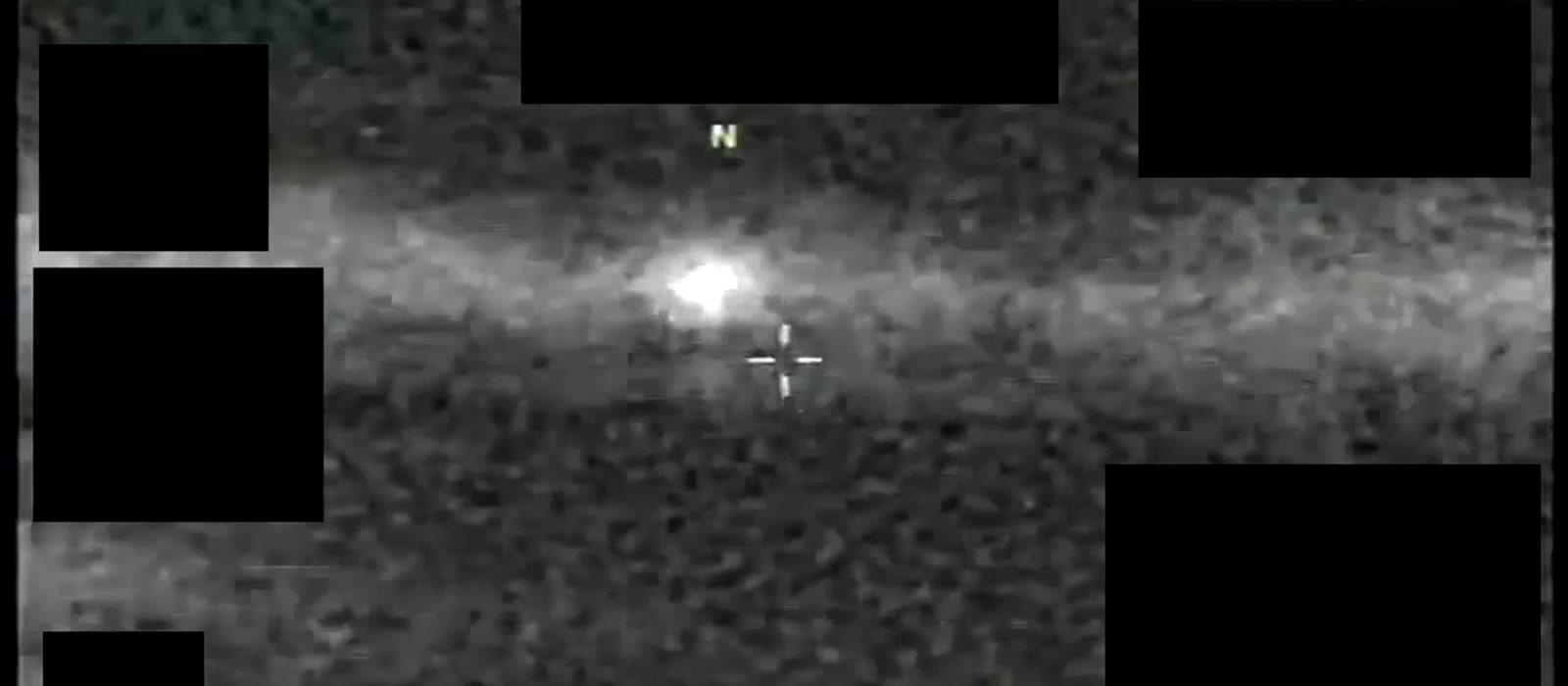
The most viral second in War.gov Release 02 may be the second where the sensor stops tracking.
That is the tension inside DOW-UAP-PR051, “Syrian UAP instant acceleration”. The public title is built for attention. A small bright area of contrast sits near the center of an infrared-looking military video, then appears to leave the frame extremely quickly. It is short, visual, and easy to share. It also arrives with exactly the kinds of caveats that serious readers should not skip.
The clip matters. It deserves a close reading. But it does not explain itself.
The Department of War published the file as part of the second PURSUE tranche announced on May 22, 2026. The official War.gov/UFO portal places the video inside a broader Release 02 set that includes 51 videos, NASA audio records, DOE material, a CIA report, the ODNI narrative, and the Sandia Base historical file.
In that mix, PR051 is the obvious viral object. The title says “instant acceleration.” The picture looks dramatic. ABC News singled it out as a newly released video taken from an infrared sensor aboard a U.S. military platform in 2021 and uploaded to a classified network in 2024. A congressional request letter also listed “Syrian UAP instant acceleration, 2021” among the videos lawmakers wanted delivered for review.
That public attention is understandable.
It is also where the careful work begins.
What The Official Record Actually Says
The most useful public description is on the DVIDS record page, where the video is posted under the All-domain Anomaly Resolution Office.
The official description says AARO assesses the video is likely derived from an infrared sensor aboard a U.S. military platform operating within the U.S. Central Command area of responsibility in 2021. It also says a user uploaded the video to a classified network in June 2024.
Those facts matter, but the caveats matter just as much.
The description says many of the responsive materials identified by AARO lack a substantiated chain of custody. It also says this particular media was digitally altered before it was uploaded to the classified network and is being presented as received.
That is not a throwaway line. It changes how the video should be read.
The DVIDS timeline breaks the five-minute file into segments. In the opening portion, the sensor pans to keep an area of contrast near the center of the frame. Then, around the key moment, the sensor stops tracking that area of contrast, causing it to move rapidly out of the right side of the frame. The rest of the file includes black screens with labels, digitally altered replays, slower-speed segments, inverted black-and-white values, a far-zoom replay, rapid zoom changes, a reticle lock around the area of contrast, and a final replay of the key exit moment.
The official description ends with an important warning: the description is informational and should not be read as an analytical judgment, investigative conclusion, or factual determination about the event.
That is the strongest guardrail in the whole record.
Why The Clip Went Viral
PR051 went viral because it gives the public something simple to react to.
Many UAP records require patience. A historical PDF needs context. A narrative record needs corroboration. A NASA audio excerpt needs mission background. A military sensor clip, by contrast, gives viewers an immediate visual puzzle.
This one gives them a particularly powerful puzzle: a bright object, a centered crosshair, and an apparent burst out of frame.
The phrase “instant acceleration” does even more work. It connects the viewer’s first impression to one of the most familiar UAP talking points: sudden movement without an obvious conventional explanation. A reader does not need to know the details of PURSUE, AARO, DVIDS, or CENTCOM to feel the pull of that phrase.
But the title is not the case conclusion.
The official DVIDS description calls it the uploader-defined title. That is a crucial distinction. A title can preserve how a file was labeled inside a network or upload trail. It does not automatically mean the government has confirmed the object’s physical acceleration, speed, propulsion, size, range, or identity.
That difference is where many bad readings begin.
If a viewer starts with the title and then watches only the fast exit, the conclusion may feel obvious. If the viewer starts with the official description, the conclusion becomes narrower: the public has an official video file, apparently derived from an infrared sensor, containing a visually striking tracking break or exit moment, but the public does not have enough surrounding data to determine what physically happened.
That is less exciting. It is also more accurate.
The Key Second Is Not Enough
The most important line in the DVIDS description is the line about the sensor stopping its tracking.
That does not debunk the video. It does not identify the object. It does not prove the apparent motion is only a camera effect. It also does not prove extraordinary acceleration.
It tells us that the public must separate two questions.
First: what does the video appear to show?
Second: what physical event does that appearance represent?
Those are not the same question.
The video appearance is clear enough to describe. A bright area of contrast is tracked, then it exits quickly after the tracking behavior changes. The public can see that.
The physical interpretation is not clear from the released material. The object may have moved rapidly. The sensor may have lost or changed tracking. Platform movement, zoom behavior, range, field of view, stabilization, digital processing, clipping, compression, or the absence of original metadata could all affect what the public clip seems to show.
The public file does not give enough information to decide between those possibilities.
That is why the word “appears” matters. It is fair to say the object appears to depart rapidly. It is not fair, from the public file alone, to say the object demonstrated verified instantaneous acceleration.
The first claim describes the artifact. The second claim interprets the event.
What PR051 Adds To Release 02
The Syrian clip is still valuable.
First, it gives the public an official record page for one of the most discussed videos in the Release 02 set. That matters because the clip can now be studied in relation to a stable public source rather than only as a reposted social-media fragment.
Second, it makes the provenance problem visible. The file is not just a clean native sensor export with a full public chain. The official description says the material was digitally altered before upload and that many responsive materials lack a substantiated chain of custody. That caveat is not a reason to ignore the record. It is a reason to label it correctly.
Third, it gives readers a concrete example of why a UAP video should not be treated as a self-contained answer. PR051 is not weak because it is visual. It is incomplete because the visual layer arrives without the full case layer.
Fourth, it connects Release 02 to congressional oversight pressure. The House request letter listed the Syrian acceleration video as one of the sought records. That gives the public a clearer path from political demand, to AARO collection, to public release.
Finally, PR051 helps compare different kinds of Release 02 video evidence. It is not the same as the Lake Huron shootdown-related video, where a known 2023 North American engagement defines the public stakes. It is not the same as the Iran formation record, where multiple objects and regional context shape the question. PR051 is a sensor-behavior test case: the public reaction depends heavily on one visually dramatic moment.
That makes it useful.
It also makes it risky.
What PR051 Does Not Add
The public record does not identify the object.
It does not provide distance, altitude, object size, object speed, platform location, exact sensor mode, raw frame metadata, radar correlation, operator notes, weather context, friendly activity, adversary activity, or a final AARO assessment.
It also does not give the public a native unaltered file, at least not in a way that can be verified from the public page alone.
That is a major limitation. If a video has been digitally altered before upload, readers need to know what kind of alteration occurred, when it occurred, who performed it, and whether the original remains available for comparison. The DVIDS page gives a helpful timeline of the visible edits and replays, but it does not give the full underlying case history.
That means PR051 should not be used as proof of exotic propulsion.
It also should not be dismissed as meaningless.
The better conclusion sits between those extremes: PR051 is an official public artifact that documents a reported unresolved video record. It contains a striking apparent motion event. It also carries official caveats that prevent the public clip from supporting the strongest claims people want to attach to it.
That is the evidence boundary.
How To Watch It Responsibly
A responsible viewing of PR051 should move in stages.
First, watch the earliest segment for the basic sensor behavior. Do not begin with the slowed or altered replays. The first pass is where the public can see the original tracking sequence as presented in the file.
Second, separate the area of contrast from the labels around it. The black redaction blocks, crosshair, center mark, direction indicator, and later replay labels all shape the viewer’s eye. They are part of the video artifact, not proof of the object’s physical behavior.
Third, compare the key exit moment with the DVIDS timeline. The official description says the sensor stops tracking the area of contrast around that moment. That should be part of any interpretation.
Fourth, treat the altered replays as explanatory edits, not independent evidence. Slowed footage, edge enhancement, inversion, zoom, and replay can help viewers see an object more clearly. They can also make a weak visual impression feel stronger than the original segment supports.
Fifth, ask what missing data would change your confidence. If you cannot answer that question, you are probably reacting to the image rather than evaluating the case.
This is not skepticism for its own sake. It is the minimum standard for a public sensor video.
What Would Make The Case Stronger
The most valuable future release for PR051 would not necessarily be a sharper-looking clip.
It would be context.
A stronger public case file would include:
- The native original video or a clear explanation of why it cannot be released.
- A correction history showing when digital alterations were made.
- Sensor metadata, including field of view, zoom, tracking mode, frame rate, and stabilization details.
- Platform location and motion, even if generalized for security.
- Object range estimates or a statement that range could not be determined.
- Any radar, mission, or operator records associated with the observation.
- Weather and airspace context.
- A plain-language AARO assessment explaining whether the event remains unresolved and why.
Those materials would not automatically prove an extraordinary explanation. They would do something better: make the case testable.
Without them, the public is left with a compelling clip and a set of caveats.
That is not nothing. But it is not enough.
Why This Video Matters Beyond Syria
PR051 is bigger than one record because it shows how the public will handle the rest of the archive.
Release 02 contains many short videos. Some will look strange. Some will have titles that imply dramatic movement. Some will be copied into compilations without their official caveats. Some will be slowed, cropped, circled, sharpened, narrated, and reposted until the original record is almost invisible.
That process can turn a public archive into a rumor machine.
The way to prevent that is not to avoid dramatic clips. It is to keep the source layers attached:
- The official record.
- The public video artifact.
- The uploader-defined title.
- The chain-of-custody caveat.
- The digital-alteration note.
- The missing metadata.
- The unresolved status.
- The difference between appearance and physical interpretation.
PR051 is a perfect teaching case because all of those layers are visible if readers slow down enough to notice them.
The video should be watched. It should be discussed. It should be compared with other Release 02 records. But it should not be treated as a one-second verdict.
The Bottom Line
The Syrian UAP instant acceleration clip is one of the most important videos in War.gov Release 02 because it shows both the power and the danger of public sensor footage.
It gives the public a dramatic official artifact. It also gives the public a lesson in restraint.
The record supports a narrow claim: AARO released a video likely derived from an infrared sensor aboard a U.S. military platform in the CENTCOM area in 2021, later uploaded to a classified network, and publicly presented with clear caveats about chain of custody, digital alteration, and the limits of the description.
The record does not publicly verify object identity, speed, range, propulsion, intent, or extraordinary origin.
That makes PR051 worth studying, not worshiping.
The fastest-looking clip in Release 02 needs the slowest reading. Until the public gets the native file, metadata, tracking context, and case assessment around it, the most responsible conclusion is simple: this is a significant unresolved video record, not a final answer.