War.gov UFO Release 03: The New Files Are a Map of Evidence Gaps
Release 03 is the most useful PURSUE batch so far if you read it as a research map instead of a revelation.
The Department of War published the third release of declassified and historical Unidentified Anomalous Phenomena files on June 12, 2026. The files sit in the official War.gov/UFO portal, alongside the earlier batches from May 8 and May 22. The portal identifies Release 03 as cleared for release on June 12 and provides separate download packages for documents and videos.
Our local index now catalogs 72 Release 03 records:
| Source group | Indexed records | Main contribution |
|---|---|---|
| FBI | 23 | Modern witness interviews, orb sightings, Colorado Springs material, Western U.S. renderings, older field-office records |
| Department of War | 21 | AARO case analysis, Western U.S. narratives, historical military UFO studies, and nine videos |
| CIA | 18 | Historical intelligence files, foreign sightings, Project Blue Book material, scientific panels, and international UFO studies |
| NASA | 8 | Gemini-era crew and experiment debriefings |
| Intelligence Community Assessment | 1 | Colorado Springs analysis |
| U.S. Government / other | 1 | Congress-White House correspondence |
That mix matters. Release 03 is not just a pile of dramatic clips. It is a layered archive: historical files, modern law-enforcement interviews, analytic memos, witness renderings, spaceflight debriefings, and public-facing video artifacts. The question is not whether one file “proves aliens.” The better question is what this batch shows about how unresolved UAP claims move from observation to file, from file to analysis, and from analysis to public debate.
What Release 03 Adds
Release 01 introduced the public archive. Release 02 expanded the archive with a large block of military sensor videos, NASA audio, DOE records, CIA material, and a notable ODNI narrative. Release 03 changes the shape again.
The third batch adds five useful layers.
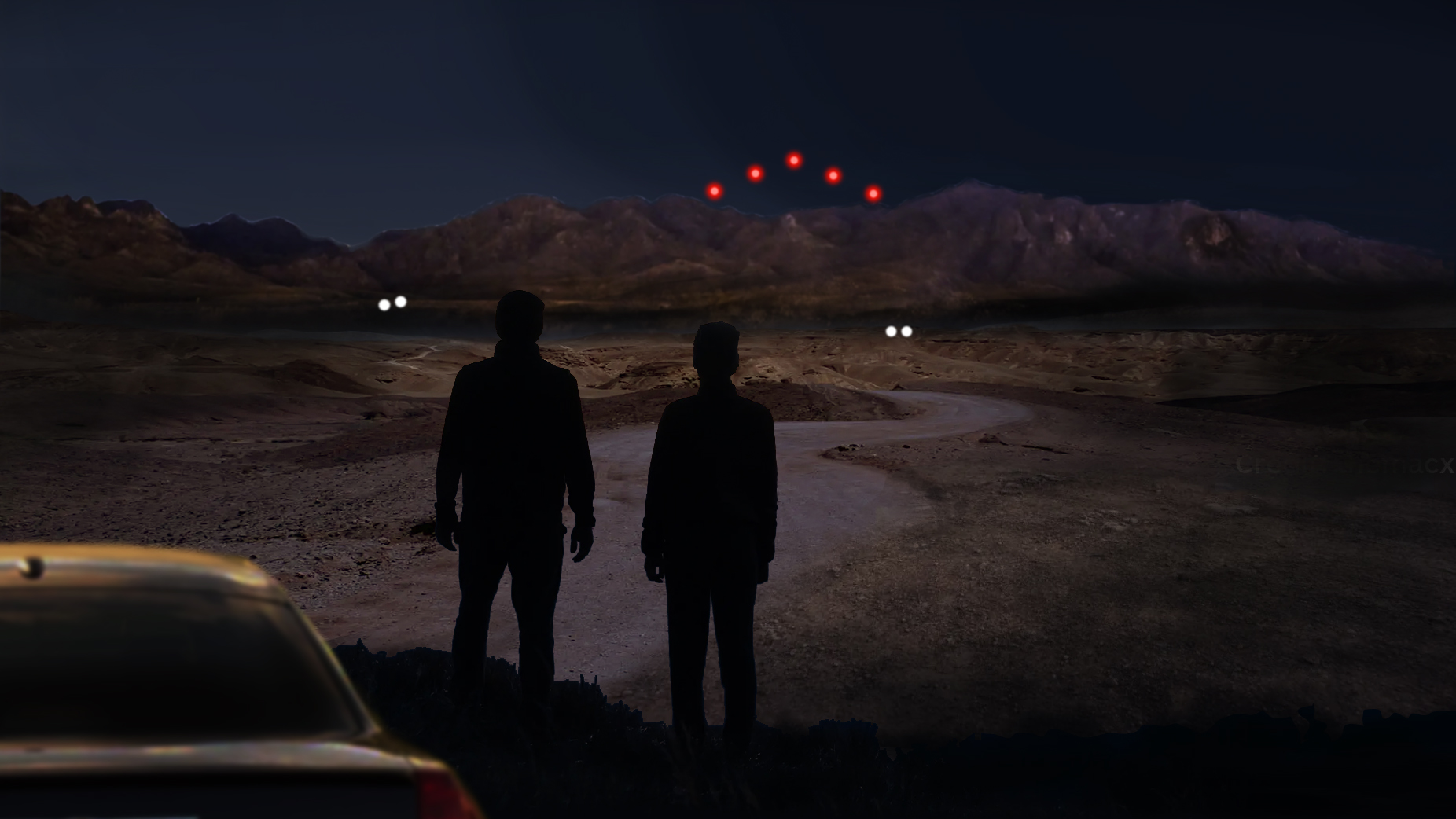
First, it adds a fuller modern investigation trail around the Western U.S. “orbs launching orbs” case. The earlier public record made the case memorable because federal law-enforcement witnesses described orange lights producing smaller red lights. Release 03 adds an AARO analysis update, related narratives, a notional map, and multiple FBI digital renderings.
Second, it brings the Northeastern orb reports into the public record through FBI interview documents and related videos. These files are valuable because they show a more ordinary reporting pathway: a witness sees something, records a phone video, describes the object, and the account becomes a federal interview record.
Third, it adds the Colorado Springs case, where U.S. Army witnesses reported a pale, angular, potato-like object near Cheyenne Mountain in February 2022. The public analysis offers a possible natural explanation, but with low confidence.
Fourth, it widens the historical record. CIA files in the batch include scientific advisory material, Project Blue Book material, British and Australian UFO studies, reports connected to Budapest, Sary Shagan, South Asia, and a Zimbabwe airport sighting.
Fifth, it extends the spaceflight thread. The NASA Gemini files are not the same kind of evidence as modern orb videos, but they preserve mission-era language, debriefing structure, and astronaut operational context.
Taken together, Release 03 is less of a single headline and more of a source map.
The Western U.S. Orb Case Is the Anchor
The most important Release 03 record may be DOW-UAP-D077, “Unresolved Case Analysis Update Western United States Event”.
The memo says six federal law-enforcement special agents observed unusual lights near a sensitive national security site in the western United States over two days in October 2023. The reported pattern is now familiar: an orange “mother orb” appears, smaller red “orbs” emerge, the red lights move in varied ways, and the objects disappear. In at least one account, a red orb reportedly stayed stationary above a ridgeline for several hours.
This is exactly the kind of case that can become distorted online. It has credible witnesses, a vivid visual pattern, official attention, and no simple final answer. It also has a major evidence gap: the memo says the reporting agents did not collect video footage, photographic imagery, or other technical data during the incident.
That missing data is not a footnote. It defines the whole case.
AARO considered several possible explanations. Military aircraft flares are treated as partially plausible for about 60 percent of the reported activity. That matters because the area had military aircraft operating nearby and deploying infrared countermeasure flares during an exercise. But the memo says about 40 percent of the reported phenomena still lacked a plausible explanation after first-stage analysis.
The unresolved portion is not automatically extraordinary. AARO also describes possible U.S. capability deconfliction as plausible but inconclusive. It treats foreign intelligence activity as highly unlikely, environmental explanations as unlikely, and “unrecognized technology” as pending. The careful reading is this: the case is unresolved because multiple explanations only partially fit, and the remaining testimony is not backed by technical capture.
That is still important. It means Release 03 gives researchers a structured question, not a final conclusion.
Why the Colorado Springs Case Matters
The Colorado Springs material is valuable for the opposite reason. It shows how an odd report can remain unresolved even when investigators lean toward a conventional explanation.
ICA-UAP-D001, “Analysis Colorado Springs UAP Incident” concerns a February 15, 2022 sighting by five U.S. Army service members near Cheyenne Mountain. The object was described as stationary, pale, angular, irregular, and shimmering. The analysis says it was possibly sunlight backscattering from snow-covered ground onto low clouds.
But the assessment is low confidence. The file cites uncertainty around witness field of view, snow cover, cloud elevation, and cloud amount. It also notes that no aircraft or balloons were recorded in the relevant area at the time.
That makes the Colorado Springs file a useful teaching case. A mundane explanation may be possible without being proven. A low-confidence explanation is not the same as a debunking. It is also not evidence of exotic origin. It is a bounded judgment from incomplete data.
The Associated Press focused on this case because the witness description is vivid and media-friendly: a strange pale object compared to a potato or bean. That is understandable. But the deeper value is the analytic posture. The government did not simply say “mystery.” It proposed a physical mechanism and then labeled the uncertainty.
That is the standard UAP records need more often.
The Northeastern Orb Files Show the Public Artifact Problem
The Release 03 Northeastern orb files show a different problem: public video can create attention faster than it creates understanding.
FBI-UAP-D009 records a witness interview about a red sphere seen in July 2025 in the northeastern United States. The witness described an intense bright red object in a backyard, a second similar object, silent motion, and the two lights moving away together. The interview says cellphone video was captured.
AP reported that the White House shared the related video on social media under the file name “NORTHEASTERN ORB SIGHTING, 2025.” Axios also highlighted the orb videos as part of the new cache, noting that the administration released records and videos involving colorful lights and other UAP-like objects.
That public framing matters. Once a video is posted socially, it starts living two lives:
| Layer | What it can support |
|---|---|
| FBI interview | A person reported an event and described it under interview conditions |
| Public video | A visible artifact exists, but it may not preserve distance, size, speed, or identity |
| Media coverage | The case is attracting attention and becoming part of the public narrative |
| Social reaction | People are testing interpretations, often faster than evidence can support |
The public record supports a narrower claim: a witness report exists, a video artifact exists, and the case entered the Release 03 package. It does not publicly establish object identity.
That distinction should be kept visible in every future article about the Northeastern orb files.
The CIA Files Are Historical Context, Not a Shortcut to Proof
Release 03 also includes a large CIA block. These files are easy to overread because old intelligence documents carry visual authority. They look serious, they are stamped, and they often concern foreign locations or Cold War intelligence settings.
The better reading is more disciplined.
CIA-UAP-009, “Unknown Flying Objects Observed Over Budapest” preserves a 1955 letter-based report about fast-moving objects. CIA-UAP-011, “The Sary Shagan Weapons Testing Range” extends a sensitive Cold War location thread already familiar from earlier PURSUE coverage. CIA-UAP-015, “Project Blue Book Special Report No. 14” puts a major historical study into the same indexed environment as modern reports.
AP and The Guardian both drew attention to a 2008 Zimbabwe airport account in the new batch. The reported object was described as disc-like, with rotating lights and beams. AP notes that the file did not settle the object’s origin, and The Guardian framed the broader batch as strange lights with few hard facts.
That is the right boundary. CIA records show what was collected, transmitted, preserved, or considered. They do not automatically verify every observation inside them. A historical intelligence file is evidence of institutional attention and reporting flow. It is not, by itself, proof of the nature of the phenomenon.
What the Media Conversation Got Right
The English-language coverage around Release 03 is useful because it shows what the public will notice first.
AP emphasized the vivid cases: the Colorado Springs “potato” object, the Western U.S. red and orange orb reports, the Northeastern red sphere, and the Zimbabwe airport account. AP also made the important point that the files do not provide conclusive evidence of alien life or a cover-up.
The Guardian framed the release as strange lights with few hard facts, highlighting the official unresolved-case language and the risk that ambiguous material can fuel speculation. That skepticism is worth including because Release 03 needs sober reading more than hype.
Axios captured the political and public-interest angle: this release is part of a continuing wave of disclosures, and the files show years of official monitoring, investigation, and documentation of suspected UAP incidents.
The Washington Post remains useful background for the whole PURSUE program because it captured the administration’s original public framing: officials wanted the public to review the material and make up its own mind, while more files would arrive on a rolling basis.
Those four frames produce a clear content map:
| Public frame | Better research question |
|---|---|
| ”The government released UFO files” | Which records are new, which are historical, and which are updates? |
| ”Orbs are splitting or launching other orbs” | What is witness testimony, what is video, and what is analysis? |
| ”AARO says some percentage is unexplained” | What data supports the unresolved portion, and what data is missing? |
| ”No proof of aliens” | What does the release still add to UAP transparency? |
What Release 03 Does Not Add
Release 03 does not add a complete public case packet for the most interesting events.
For the Western U.S. case, the public has narratives, an analysis update, a notional map, and renderings. It does not have the missing sensor data that would make distance, altitude, speed, and object identity easier to evaluate.
For the Northeastern orb case, the public has FBI interview material and videos. It does not have enough open technical metadata to determine size, range, source, or environmental context with confidence.
For Colorado Springs, the public has witness statements and a low-confidence assessment. It does not have a clean physical reconstruction that turns the sunlight explanation into a closed case.
For the historical CIA material, the public has old reporting records. It does not have a guarantee that the events inside those records were independently verified.
That does not make the batch weak. It makes the batch useful in a specific way. It tells researchers where the archive is still thin.
The Best Follow-Up Questions
Release 03 gives the public several concrete follow-up paths.
For the Western U.S. case:
- Were any range, radar, satellite, or base-security systems collecting data during the reported windows?
- Can AARO publish a more detailed version of the 60 percent flare correlation without exposing sensitive activity?
- What exact features remain inside the unresolved 40 percent?
- Could future reporting protocols require immediate video, azimuth, compass heading, and time-synced witness logs?
For the Northeastern orb cases:
- Can the released videos be accompanied by original file metadata?
- Were the objects correlated against drones, aircraft, astronomy, weather, or local lighting?
- Are there multiple independent observations from the same location over time?
For Colorado Springs:
- Can a public reconstruction show the sun angle, mountain profile, cloud layer, witness position, and possible reflection path?
- Was the low-confidence backscatter explanation tested against archived weather imagery?
For the historical files:
- Which records are newly public, and which are older public records newly indexed inside PURSUE?
- Can scanned historical files be paired with provenance notes and prior release history?
These questions are better than asking whether Release 03 “proves” anything. A public archive earns value when it helps people ask sharper questions.
Bottom Line
Release 03 does not settle the UFO debate. It does something more practical.
It shows how unresolved UAP cases look when they move through official systems: witness reports, interviews, renderings, partial analyses, historical files, caveats, media framing, and missing data. That is the real contribution.
The most responsible conclusion is narrow:
Release 03 adds 72 indexed records to the public PURSUE archive, strengthens several research trails, and gives readers a clearer view of what evidence exists and what evidence is still missing. It does not publicly identify the objects. It does not confirm extraterrestrial origin. It does not close the most interesting cases.
It gives researchers a better map.
That may be exactly what this archive needs next.
Explore the full Release 03 document set, read the complete War.gov/UFO guide, or start with DOW-UAP-D077, the Western U.S. analysis update.