FBI’s Flying Disc Files: Inside the Bureau’s 80-Year UFO Investigation
The Federal Bureau of Investigation’s contribution to the PURSUE release pulls back the curtain on one of the longest-running UAP investigations in U.S. history. Twenty-two files — including heavily redacted sensor imagery, high-resolution evidence photographs, and a sprawling multi-section case file — reveal the Bureau’s sustained engagement with unidentified phenomena from the 1940s to the present day.
Overview of FBI Files
The FBI’s 22 files break into three distinct categories:
| Category | Files | Description |
|---|---|---|
| FLIR/Sensor Imagery (Series A) | 8 | Infrared captures with significant redactions |
| Physical Evidence Photos (Series B) | 24 | High-resolution forensic photographs |
| Case File 62-HQ-83894 | Multiple | Multi-section investigation spanning decades |
Series A: FLIR/Sensor Imagery
What Is FLIR?
FLIR stands for Forward-Looking Infrared — a technology that detects thermal radiation invisible to the human eye. FLIR systems are standard equipment on military aircraft, surveillance platforms, and law enforcement vehicles. They reveal heat signatures, making them invaluable for detecting objects that might be invisible in visible light.
The Eight Images
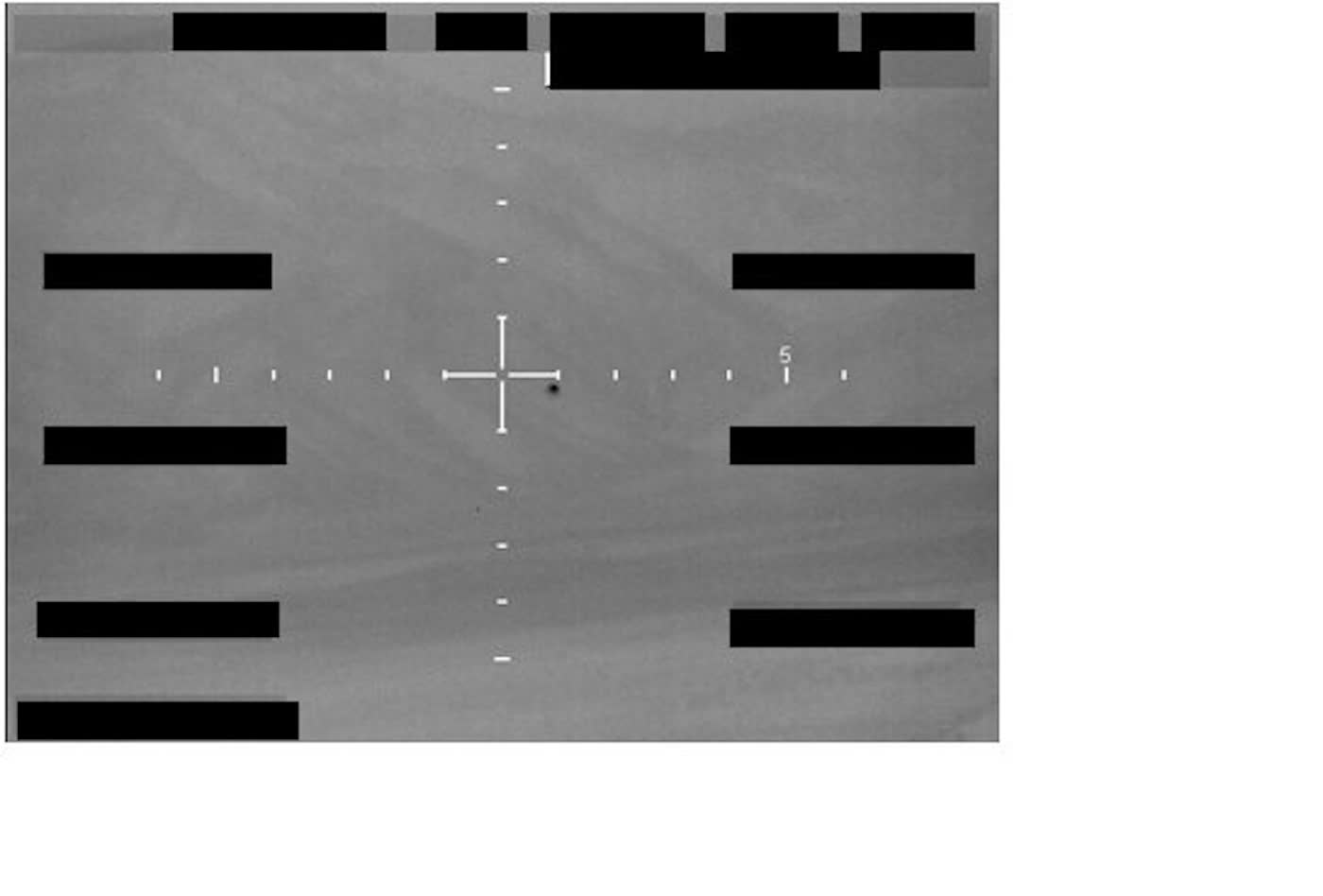
The eight Series A files (labeled fbi-photo-a1 through fbi-photo-a8) contain infrared sensor captures. Each is provided in both JPG and PNG format, suggesting the Bureau wanted to preserve maximum image fidelity.
The most immediately striking feature of these images is the extensive redaction. Large black bars obscure significant portions of each frame. This level of redaction in sensor imagery typically indicates:
- Classified sensor capabilities: The resolution, wavelength sensitivity, or processing algorithms of the FLIR system remain classified
- Operational security: The images may reveal the platform from which they were captured (aircraft type, altitude, location)
- Source protection: If the imagery came from a sensitive intelligence platform, revealing the full image could expose collection methods
What remains visible appears to show thermal signatures of objects in various environments. The shapes and heat patterns visible in the unredacted portions do not conform to common explanations for infrared artifacts (such as lens flare, atmospheric distortion, or equipment malfunction).
Series B: Physical Evidence Photographs
The 24 Photographs
Series B represents something rarely seen in UFO/UAP disclosures: professional forensic documentation of physical evidence. The 24 photographs (fbi-photo-b1 through fbi-photo-b24) are high-resolution images that appear to have been taken under controlled conditions.
The quality and composition of these photographs indicate:
- Professional forensic photography: Consistent lighting, scale references, and documentation standards
- Evidence chain custody: The images appear to follow FBI evidence documentation protocols
- Multiple angles and perspectives: Several objects appear to be photographed from multiple viewpoints
Without accompanying case notes (which may be contained in the separately released case file), the photographs alone provide limited context. However, their inclusion in the PURSUE release — and their designation as physical evidence — represents an implicit acknowledgment that the FBI has collected and preserved physical materials related to UAP investigations.
The file sizes range from 0.2 to 0.4 MB, indicating moderate resolution suitable for documentation purposes. The images are in JPG format.
View Series B evidence photos →
Case File 62-HQ-83894: The FBI’s Central UAP Investigation
Decoding the File Number
FBI case file numbers follow a specific format:
- 62: The classification code — “Administrative Inquiries” (later used for miscellaneous and special investigations)
- HQ: Headquarters file (as opposed to a field office file)
- 83894: The sequential case number
The 62-classification is significant. It places UAP investigations outside the Bureau’s standard criminal case categories (which use different numerical prefixes for terrorism, espionage, organized crime, etc.) while still maintaining them within the formal case management system.
Structure of the Release
The case file was released in multiple components:
10 Sections
The main investigation is divided into 10 chronological sections, each representing a distinct phase or period of the investigation. This structure suggests the case has been active and continuously updated over many years, with each section covering a specific time period or investigative focus.
Two of these sections are available as full PDFs:
- Section 2: 112.9 MB
- Section 10: 101.2 MB
The massive file sizes indicate these are comprehensive document collections — potentially containing hundreds of pages of reports, correspondence, witness statements, analysis, and supporting materials.
Serial Numbers
In FBI terminology, a “serial” is a document added to a case file. Each serial receives a sequential number. The PURSUE release includes files associated with these serial numbers:
| Serial # | Estimated Content |
|---|---|
| 130 | Mid-investigation document (101.7 MB PDF available) |
| 153 | Later addition |
| 164 | Later addition |
| 220 | Significant case development |
| 403 | Major update |
| 438 | Near-current material |
| 449 | Most recent serial in release |
The jump from serial 220 to serial 403 represents a gap of 183 serials — documents that were either not selected for release, remain classified, or may appear in future PURSUE batches.
Serial 449 being the highest number indicates the case has accumulated at least 449 distinct document additions over its lifetime. For context, a typical FBI counterintelligence case might accumulate 50–200 serials over its active period. A case with 449+ serials represents an extraordinarily sustained investigation.
Sub-file A
FBI case files can have sub-files designated by letters. The existence of Sub-file A suggests specialized content that the Bureau chose to organize separately from the main chronological sections — possibly containing particularly sensitive material, a specific sub-investigation, or documents from a particular source.
Historical Context
The 62-HQ-83894 case number doesn’t directly reveal when the case was opened, but the Bureau’s involvement with unidentified aerial phenomena dates to at least 1947. Key milestones in the FBI’s UAP history:
- 1947: FBI Director J. Edgar Hoover authorized investigation of “flying disc” reports after the Kenneth Arnold sighting and Roswell incident
- 1949: FBI formally declined continued UAP investigation, stating it was a military matter
- 1950s: Despite the official stance, FBI files show continued collection of UAP-related information
- 2004: Modern era of military UAP encounters begins with the USS Nimitz incident
- 2017: Public disclosure of the AATIP program renews institutional interest
- 2022: AARO established; FBI becomes a contributing agency
- 2026: PURSUE release includes FBI UAP files
The span from the earliest serials to serial 449 likely covers much of this timeline, making 62-HQ-83894 potentially one of the longest-running investigations in FBI history.
What the FBI Files Reveal About Methodology
Investigation Standards
The FBI’s contribution to PURSUE demonstrates that the Bureau applied its standard investigative methodology to UAP cases:
- Evidence collection: Physical materials were collected, photographed, and preserved according to forensic protocols
- Sensor data: Technical sensor imagery was obtained and analyzed
- Case management: A formal headquarters case file was maintained with proper serial documentation
- Multi-section organization: The investigation was organized into phases, suggesting periodic reviews and assessments
- Long-term commitment: The case remained active across decades, receiving continuous updates
Redaction Patterns
The level of redaction in the Series A imagery — but not in the Series B photographs — suggests a deliberate distinction:
- Series A (heavily redacted): These images likely involve classified sensor technology or were captured by intelligence platforms whose capabilities remain secret
- Series B (unredacted): These photographs were taken using standard forensic photography equipment, with no technology-related classification concerns
This pattern tells us that the FBI’s UAP investigation involved both conventional evidence collection (photographing materials, documenting scenes) and access to classified sensor data from intelligence community partners.
Key Questions Raised
The FBI files raise several important questions:
-
What physical materials were collected? The 24 evidence photographs document something tangible. What were these objects, and where are they now?
-
What do the unredacted portions of FLIR imagery show? Even with heavy redaction, the visible portions suggest thermal signatures inconsistent with conventional explanations.
-
Why is the case still active? With 449+ serials, this investigation has been continuously updated. What new information continues to be added?
-
Where are serials 220–402? The gap in released serial numbers represents 183 documents that were not included in this batch.
-
What’s in Sub-file A? The separate sub-file suggests specialized content deemed significant enough to organize independently.
Explore All FBI Files
Browse the complete FBI collection in our archive:
- FLIR/Sensor Imagery — Series A (8 files)
- Physical Evidence Photos — Series B (24 files)
- Case File 62-HQ-83894 — Section 2 (PDF, 112.9 MB)
- Case File 62-HQ-83894 — Section 10 (PDF, 101.2 MB)
View all FBI documents on our FBI agency page →
This analysis is based on publicly available PURSUE files and historical FBI records. Updated as new information becomes available. Last updated: May 10, 2026.