The Lake Huron UAP Video Shows Why Release 02 Still Needs Case Files
The Lake Huron video is one of the most important records in War.gov Release 02, but not because it settles the case.
It does almost the opposite. It shows why public UAP transparency cannot stop at video.
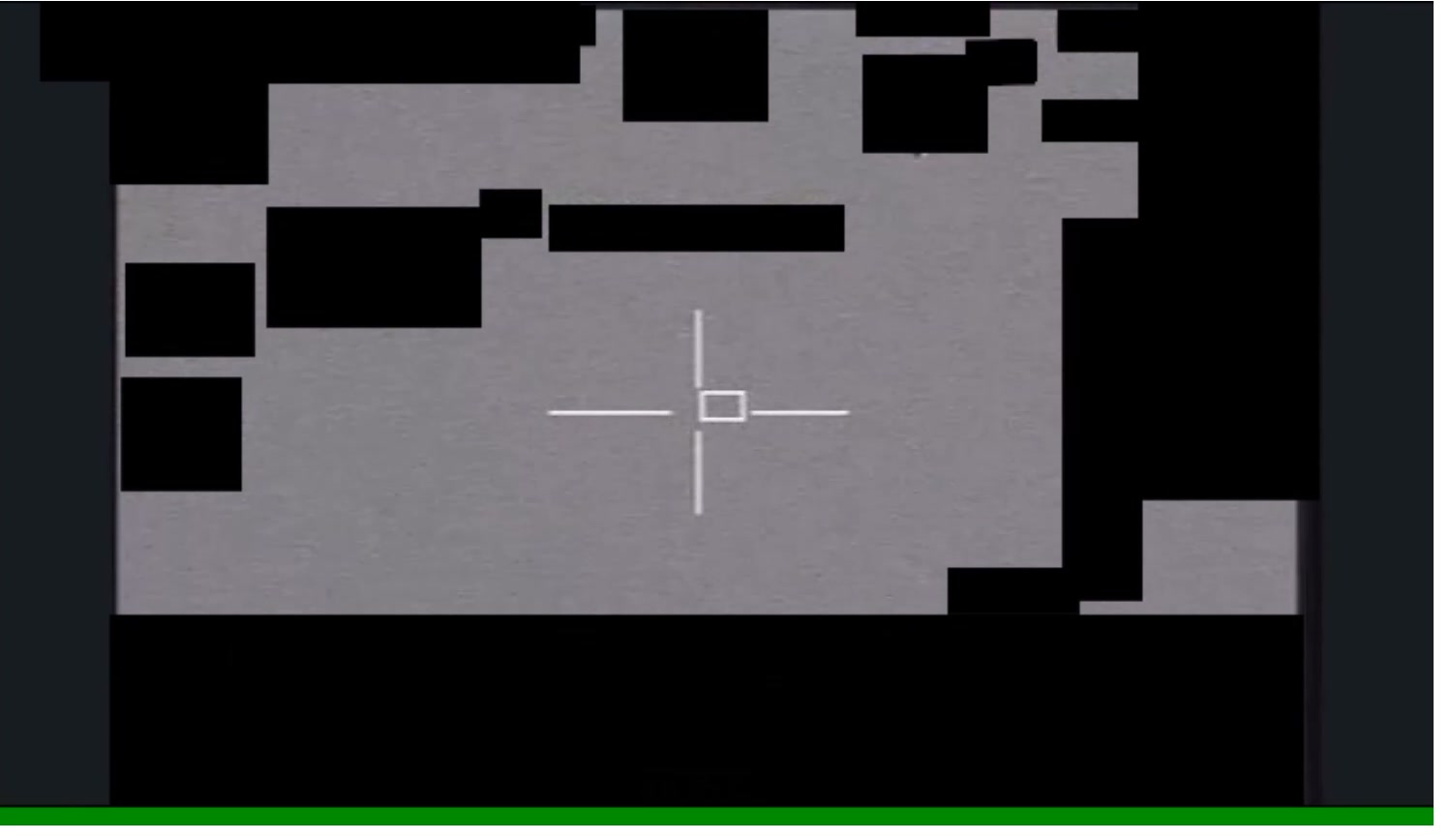
The record is DOW-UAP-PR071, “USAF ANG F-16C Shoots Down UAP over Lake Huron”, released as part of the second PURSUE tranche on May 22, 2026. The title alone is enough to make the file stand out. This is not a distant light, a historical rumor, or an ambiguous astronaut observation. It is tied to a real U.S. military engagement over North America on February 12, 2023.
That makes the clip politically important, historically important, and easy to sensationalize.
It also makes it a perfect test case for how this archive should be read. If we treat the Lake Huron footage as a final answer, we learn very little. If we treat it as one visible layer inside a larger unreleased case file, we learn much more about what Release 02 has changed and what it still leaves out.
The 2023 Event Was Already Public
The Lake Huron shootdown did not become public because of Release 02. The basic event was known in 2023.
On February 12, 2023, the Department of Defense said that, at the direction of President Biden and on military recommendations, an F-16 fired an AIM-9X missile and shot down an airborne object flying at about 20,000 feet over Lake Huron in Michigan. The official 2023 statement said the object posed a potential hazard to civil aviation and that its path took it near sensitive sites. The incident came during a tense period after the Chinese surveillance balloon and other high-altitude objects over North America.
That context matters because Release 02 did not introduce the incident. It introduced a new public artifact from the incident.
Before Release 02, the public had official statements, news reporting, political debate, and a fog of speculation. After Release 02, the public also has an officially posted video record linked to the shootdown.
That is a meaningful change. But it is not the same as a complete explanation.
The Department of War’s Release 02 announcement frames the new files as part of PURSUE, a rolling public release system. The official portal is War.gov/UFO. In this site’s indexed record, AARO assesses that the Lake Huron video is likely derived from an infrared sensor aboard a U.S. military platform operating in the NORTHCOM area of responsibility in 2023.
That is the narrow claim the file supports.
The public now has official footage associated with the Lake Huron engagement. The public still does not have the full case.
Why This Clip Carries More Weight Than a Typical UAP Video
Many Release 02 videos show unresolved objects from military sensors. The Lake Huron clip is different because the event was not only observed. It was acted upon.
A U.S. fighter engaged the object. That immediately raises the stakes.
Most UAP videos invite questions about identification: what is the object, what sensor collected it, how far away was it, what might explain the apparent motion? The Lake Huron record adds another layer: what justified the decision to shoot it down?
That does not mean the object was exotic. It means the decision chain matters.
For this kind of case, the public needs more than imagery. It needs the sequence:
- How the object was first detected.
- What radar tracks existed before the intercept.
- What pilots saw visually, if anything.
- What the sensor showed before and after the engagement.
- What altitude and flight profile were recorded.
- What threat assessment was made.
- What was recovered, if anything.
- What later analysis concluded.
The video gives us one window into the event. The questions above define the case file around it.
That is why the Lake Huron record should not be treated like a standalone viral clip. It belongs in a timeline of detection, interception, engagement, attempted recovery, public explanation, and later declassification.
What the Video Adds
The video matters in four concrete ways.
First, it anchors the Lake Huron shootdown inside the PURSUE archive. That makes the event searchable beside other Release 02 military videos, documents, and audio records. It is no longer only a 2023 news event. It is now a public UAP archive entry with a stable record page.
Second, it confirms that an official video artifact exists in releasable form. That does not guarantee that the public version is native sensor footage, complete footage, or the highest-quality available record. But it does show that the government can publish at least some visual material tied to this engagement.
Third, it helps readers compare the Lake Huron case with other military videos in Release 02. Compare it with DOW-UAP-PR051, the Syrian instant acceleration record, DOW-UAP-PR050, the Iran four-UAP formation record, and DOW-UAP-PR098, the Persian Gulf formation record. Those records have different regions, dates, sensor contexts, and public implications. Lake Huron stands out because it took place over North America and ended in a weapons engagement.
Fourth, it sharpens the transparency standard. Once a shootdown video is public, the obvious next question is not “do we have a clip?” The question is “what else exists?”
That is where the real value of this record begins.
What the Video Does Not Add
The clip does not identify the object.
It does not, by itself, prove an extraordinary origin. It does not prove advanced technology. It does not prove a foreign platform. It does not prove a hobby balloon. It does not prove a sensor artifact. It does not prove that the shootdown was either justified or unjustified.
It is an official visual record connected to a known military event. That is important. But public importance is not the same as evidentiary completeness.
This distinction is especially important because the Lake Huron incident has always lived inside a confusing public information environment. It happened days after the Chinese balloon story, during heightened air-defense attention, and alongside multiple other objects over North America. Early explanations were cautious. Some later public discussion pointed toward possible balloon-like or civilian explanations. Other voices emphasized military uncertainty. Release 02 enters that already-charged space.
The mistake would be to make the video carry more weight than it can bear.
A video can show that a military sensor captured something. It can show a track, a heat contrast, an engagement moment, or a visual fragment. But unless it is accompanied by enough metadata and analysis, it cannot fully answer object identity, object size, distance, speed, material, source, or intent.
Those are not small details. They are the case.
The Difference Between a Clip and a Case File
The Lake Huron record is valuable because it makes one thing obvious: UAP disclosure is not just about releasing media. It is about releasing context.
A clip is what the public can watch.
A case file is what lets the public understand what it is watching.
For Lake Huron, the case file would ideally include radar data, pilot audio, mission logs, rules-of-engagement context, sensor metadata, intelligence assessments, recovery notes, and post-event review. Some of that may remain classified for legitimate reasons. Some of it may be unreleasable because it exposes platforms, methods, or operational details. But if that is the case, the public record should say clearly what is missing and why.
Without that structure, every public video becomes a mirror. Believers see confirmation. Skeptics see weak data. Journalists see a headline. Researchers see missing metadata. Politicians see leverage. The public sees confusion.
The way out is not less disclosure. It is better-labeled disclosure.
Release 02 would be stronger if each video record carried plain-language status fields:
- Public clip only or fuller case packet available.
- Native sensor file or public rendition.
- Known event date and location confidence.
- Collection platform category, if releasable.
- Any recovery status.
- Any official explanation or unresolved status.
- Known public claims that go beyond the file.
The Lake Huron record is exactly the kind of case where those labels matter.
Why Lake Huron Is Not Just Another UFO Story
Lake Huron sits at the intersection of three different public concerns.
The first is air defense. The object was treated as a potential aviation or security problem. That puts the case in the same public conversation as NORAD, radar coverage, military readiness, and how the United States responds to unknown objects in controlled airspace.
The second is transparency. The public was told about the 2023 event quickly, but not given enough material to understand it fully. Release 02 improves that picture, but only partially.
The third is UAP interpretation. Once the object appears in a UFO archive, readers naturally ask whether the UAP label means something more dramatic than “unidentified.” It does not automatically. In this context, UAP means the public record has not resolved the object in a way that can be cleanly explained from the released materials.
That is still worth studying.
The best public posture is neither belief nor dismissal. It is a demand for traceable records.
If Lake Huron was a mundane object, the public record should be able to show how that conclusion was reached. If it remains unresolved, the public record should explain what prevented identification. If key evidence is withheld, the record should separate “withheld” from “unknown.” If recovery failed, that should be clear. If recovery succeeded, the public should know whether later analysis changed the case.
That is what serious transparency would look like.
Mainstream Coverage Got the Hook Right, But the Archive Has to Go Deeper
Mainstream outlets correctly noticed the Lake Huron clip because it is one of the most dramatic items in Release 02. CBS News highlighted it as a notable video connected to the 2023 shootdown. Other coverage grouped it with the Syrian acceleration clip, the ODNI orb narrative, NASA audio, and Sandia historical records.
That is good news-cycle framing. It helps readers see why Release 02 is not just another quiet database update.
But the job of an archive is different from the job of a headline.
A headline can say “fighter jet shot down unidentified object.” An archive has to ask: what was the object, how was it tracked, what was released, what is missing, and what should readers not conclude?
That deeper work is where Lake Huron becomes useful for the site’s long-term mission. The article value is not only that the clip is dramatic. The article value is that the clip reveals the gap between public spectacle and public understanding.
What Readers Should Watch For Next
The Department of War has said more PURSUE material is being prepared. If future releases add to the Lake Huron record, readers should look for specific kinds of evidence.
The most valuable additions would not necessarily be more dramatic video. They would be context:
- A fuller timeline from radar detection to intercept.
- Pilot statements or audio, if releasable.
- Sensor metadata or a clear explanation of what has been removed.
- Recovery status and whether debris analysis occurred.
- A post-event assessment explaining why the object was or was not identified.
- A correction log if the public record changes.
Those additions would turn the Lake Huron file from a clip into a case.
That is the standard by which future releases should be judged.
The Bottom Line
The Lake Huron video is important because it connects Release 02 to a real U.S. military engagement over North America. It is one of the few records in the archive where “unidentified” was not just observed, but acted upon.
That makes the file significant. It also makes caution necessary.
The video adds a public visual layer to a known 2023 event. It does not identify the object, explain the full decision chain, prove an extraordinary origin, or close the case. The strongest conclusion is narrower and more useful: Release 02 has given the public a clip, but the Lake Huron incident still needs a fuller public case file.
That should be the lesson.
UAP transparency cannot be measured only by the number of videos released. It has to be measured by whether the public can understand what those videos mean.
Lake Huron shows how far the archive has come. It also shows how much work remains.