The UAP Science Advisory Council: 15 Scientists Will Not Solve the Mystery. They Might Redefine It.
In mid-June 2026, the White House announced a body that did not exist six months ago: a UAP Science Advisory Council composed of fifteen scientists, technologists, and researchers tasked with advising the US government on how to resolve the nature of unidentified anomalous phenomena through scientific methods.
That sentence is worth reading twice. Not because it promises disclosure. Because it promises methodology.
The council does not have subpoena power. It does not control classified databases. It cannot compel agencies to share records. What it can do is advise the government on which questions to ask, which sensors to deploy, and which analytical frameworks might separate noise from signal. If that sounds modest, it is. But the history of UAP research suggests that the question has always mattered more than the answer, and the question has been poorly framed for decades.
The council was established through coordination between the White House, the All-domain Anomaly Resolution Office (AARO), the Office of the Director of National Intelligence (ODNI), the FBI, and other intelligence community members. It reports to the UAP Governance Board. Its chair is Avi Loeb, a Harvard astrophysicist who has spent the last several years building independent instrumentation to detect anomalous objects in Earth’s atmosphere.
Here is what the council can change, what it cannot, and why the distinction is the article.
Who The Fifteen Members Are
The council’s composition is its first signal. This is not a panel of aerospace executives or former intelligence officers. It is not a panel of UFO believers. It is a deliberately heterogeneous group spanning physics, biology, psychology, statistics, anthropology, oceanography, AI, and professional skepticism.
The full roster, as disclosed by Loeb:
- Avi Loeb (Chair) — Harvard astrophysicist, director of the Galileo Project, former director of the Institute for Theory and Computation at the Harvard-Smithsonian Center for Astrophysics
- Prof. Liberty Vittert Capito — Data analysis and statistics
- Prof. Carol Cleland — Anomaly identification
- Dr. Richard Cloete — Data analysis and AI tools
- Dr. Omer Eldadi — Data management, AI, and human psychology
- Dr. Tim Gallaudet — Oceanography (retired US Navy Rear Admiral)
- Prof. Robin Hanson — Statistics and economics
- Ross Howard — Communication
- Dr. Kevin Knuth — Physics and instrumentation
- Ben Lamm — Oceanography and biology
- Dr. Devesh Nandal — Numerical analysis and astrophysics
- Prof. Garry Nolan — Molecular biology and materials science
- Dr. Michael Shermer — Study of anomalies
- Dr. Peter Skafish — Anthropology
- Prof. Matthew Szydagis — Instrumentation and data collection
- Dr. Jennice Vilhauer — Quantitative psychology
Several names deserve individual attention, not because they are famous, but because their inclusion reveals the council’s intended function.
Tim Gallaudet is a retired Navy Rear Admiral with a background in oceanography. His presence connects the council to the transmedium question that AARO has flagged in multiple case files: objects that reportedly transition between air and water. That is not a fringe concern. It is a sensor-coverage problem. Most UAP instrumentation is designed for atmospheric detection. Oceanic domains are monitored by different systems, different agencies, and different analytical communities. If the council is serious about multi-domain coverage, an oceanographer with military experience is not a decorative appointment.
Garry Nolan is a Stanford professor of molecular biology and materials science. He has publicly discussed analyzing materials associated with alleged UAP incidents. His expertise sits at the boundary between biological analysis and physical evidence processing, which matters if the council ever receives material samples for review.
Michael Shermer is the founder of Skeptic magazine and has spent his career debunking pseudoscience. His inclusion is arguably the most important signal in the entire roster. A council that includes Shermer is not a believers’ club. It is a body that has built in its own adversarial function. If the council’s conclusions survive Shermer’s scrutiny, they carry more weight than conclusions from a group that selected only for enthusiasm.
Jennice Vilhauer and Omer Eldadi bring quantitative psychology and human perception research. That matters because a significant portion of UAP evidence is testimonial, and the reliability of human testimony under unusual visual conditions is a well-studied problem with well-known limitations. The AARO case files in Release 03 repeatedly note that human ability to estimate distance, size, speed, and direction of unreferenced phenomena in low-light conditions is constrained by biological and perceptual limits. Having psychologists on the council means that constraint gets treated as a research input, not an afterthought.
Kevin Knuth and Matthew Szydagis cover physics and instrumentation. Their role is likely the most operationally significant: advising on what sensors to build, where to place them, and what data standards to require.
The range is deliberate. It suggests the council is designed not to investigate individual sightings but to build the intellectual infrastructure for investigating them properly.
What The Council Can Do
The council’s mandate, as described in the DefenseScoop announcement and Loeb’s subsequent posts, is to advise the US government on how to resolve the nature of UAP through scientific methods.
That breaks into several concrete functions.
Review historic cases. The council has requested information on more than fifty historic UAP cases. All data shared with the council will be unclassified. That is a meaningful constraint. It limits the council to cases where the government has decided disclosure is acceptable. But it also means anything the council produces can be published, debated, and independently verified.
Recommend methodology. The most valuable thing fifteen scientists can do is not look at blurry images. It is define what a good image would need to contain. What wavelengths. What frame rates. What calibration standards. What metadata. What chain of custody. UAP research has been plagued not by a shortage of reports but by a shortage of reports that meet basic scientific evidentiary standards. The council can set those standards.
Advise on sensor architecture. If AARO or other agencies are deploying detection equipment, the council can advise on placement, configuration, and data formats. This is where the line between “advisory” and “operational” gets interesting. A recommendation that changes how sensors are built changes what data exists. That is not a passive function.
Provide independent scientific review. The council reports to the UAP Governance Board but is not an agency. Its members are drawn from academia and the private sector. That structural independence matters. AARO produces analysis. The council can evaluate that analysis against scientific standards without institutional pressure to confirm or deny.
Meeting frequency has not been publicly determined as of the announcement. That is worth watching. An advisory body that meets quarterly is a different animal from one that meets monthly.
What The Council Cannot Do
The boundaries matter as much as the mandate.
The council cannot access classified material unless it is specifically declassified for them. That means the deepest cases in AARO’s files, the ones with sensor data from military platforms, satellite coverage, or signals intelligence, remain beyond the council’s reach unless the intelligence community chooses to share them.
The council cannot compel agencies to cooperate. If the Department of Defense, the CIA, the NRO, or any other body declines to provide data, the council has no enforcement mechanism. It is advisory. Advisory bodies succeed when their principals want them to succeed.
The council cannot override AARO’s analytical conclusions. It can disagree. It can publish alternative assessments. But it does not command AARO, and AARO does not report to it. They share a governance structure, but the power flows through different channels.
The council cannot conduct its own field investigations. It has no fleet of drones, no satellite constellation, no ground-based sensor network operating under its direct authority.
That last limitation is where the Galileo Project becomes relevant.
The Galileo Project: An Independent Parallel Track
Avi Loeb chairs the council, but he also directs the Galileo Project, a privately funded initiative at Harvard that has built exactly the kind of instrumentation the UAP field has needed for years.
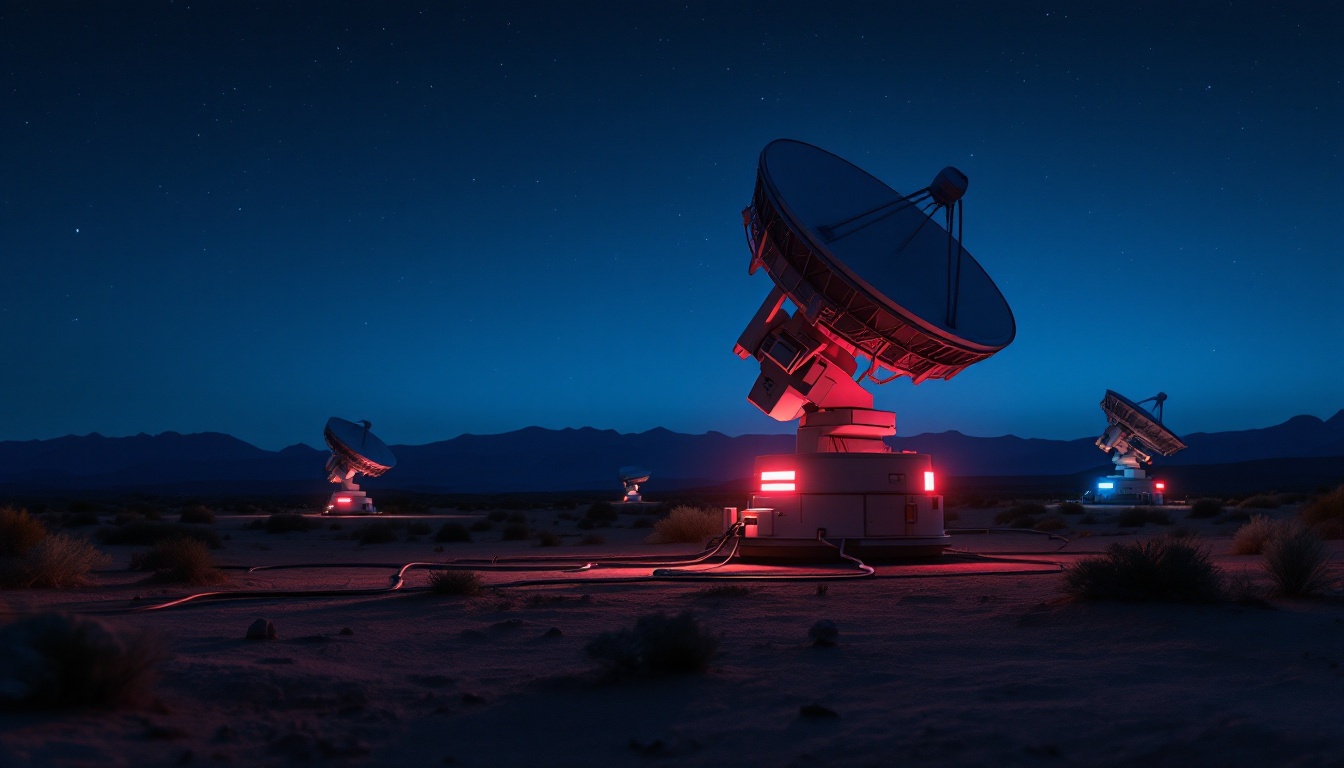
The Galileo Project currently operates three observatories. The most advanced is in Las Vegas. The three units are separated by approximately ten kilometers, which allows triangulation. They collect data in infrared, optical, audio, and radio wavelengths simultaneously.
That architecture is significant. Multi-sensor triangulation is the single most important methodological upgrade available to UAP research. A single camera can capture an anomaly. Three calibrated instruments separated by known distances can measure its range, altitude, velocity, and thermal signature. That is a different kind of evidence.
Loeb has said the project plans to release multiple scientific papers this summer based on observatory data. If those papers meet peer-review standards, they will represent something genuinely new: UAP data collected by purpose-built scientific instruments, analyzed by credentialed researchers, and published in the open literature.
The relationship between Loeb’s advisory role and his independent research role is worth noting. He chairs a council that advises the government on methodology. He also runs a project that demonstrates that methodology. If the Galileo Project produces compelling data, the council gains credibility. If the council’s recommendations reshape how agencies collect data, the Galileo Project’s standards become a template.
That is not a conflict of interest. It is a feedback loop. Whether it is a productive one depends on the quality of the data.
Loeb’s Assessment of the PURSUE Files
Loeb has already reviewed the PURSUE files released through War.gov, including the third release published on June 12, 2026. His public assessment is instructive because it is neither dismissive nor inflated.
His conclusion: “None of the objects is sufficiently extraordinary to require an exotic origin.”
That sentence will disappoint some readers. It should not. It is a scientific statement about the current evidence, not a statement about what future evidence might show.
Loeb noted that interesting details in the files were “unfortunately redacted,” and that all images in the released materials were explainable as reflections or human-made objects. He described Release 03 as the most intriguing tranche thus far, but he did not describe it as proof of anything beyond the government’s continued inability to identify certain phenomena.
What he advocates as a next step is multi-sensor triangulation. The same capability the Galileo Project is building. The same capability the council is positioned to recommend.
That consistency matters. The chair of the advisory council is not saying the existing evidence proves an exotic origin. He is saying the existing evidence is insufficient to determine origin at all, and that better instrumentation is the path forward. That is exactly what a science advisor should say.
The 40 Percent Problem

The council arrives at a specific moment in AARO’s public reporting. On June 5, 2026, AARO director Dr. Jon Kosloski presented findings that included the Western U.S. orbs case, in which trained federal law-enforcement agents observed orange “mother orbs” apparently launching smaller red orbs near a sensitive national security site.
AARO’s analysis found that approximately 60 percent of the reported activity was plausibly attributable to military aircraft dispensing infrared countermeasure flares. The remaining 40 percent lacked a reasonable explanation based on available data.
That 40 percent is the problem the council exists to address. Not the specific case, but the category it represents: incidents where trained observers report phenomena, where conventional explanations account for part but not all of the observations, and where the gap between explanation and observation cannot be closed because the right data was never collected.
The council cannot go back in time and place calibrated instruments at the Western U.S. site in October 2023. No one can. But it can advise on how to ensure that the next time federal agents report anomalous phenomena near a sensitive site, the response includes multi-sensor deployment, standardized data capture, and a predefined analytical framework.
That is not as exciting as declaring the objects extraterrestrial. It is more useful.
Scientific rigor does not add certainty to old cases. It adds resolution to future ones. The council’s value is prospective, not retrospective. If it spends its time arguing about whether a 2023 sighting was flares or something else, it will fail. If it spends its time defining what data the next sighting must produce to be scientifically adjudicable, it might succeed.
Why Redefining The Question Matters
The dominant public question about UAP is: “Are they aliens?”
That question is unanswerable with current evidence. It has been unanswerable for seventy years. It will remain unanswerable until someone collects data that can distinguish between a novel atmospheric phenomenon, a foreign adversary’s technology, a US program that has not been properly deconflicted, and something genuinely unknown.
The better question is: “What sensor architecture, data standards, and analytical framework would allow us to determine the origin of an unidentified object observed in US airspace?”
That question is answerable. It is an engineering and methodology problem. It does not require believing or disbelieving in any particular explanation. It requires defining what evidence would be sufficient to support each possible explanation, and then building the systems to collect that evidence.
Loeb has framed this clearly. In his public statements, he has offered two possible interpretations of the UAP problem: “Either the US defense system has holes because it finds objects it cannot recognize, or we are dealing with a major scientific discovery.” Either way, he argues, the research matters.
That framing is useful because it removes the stigma. If the answer is mundane, the research improves national security by identifying gaps in detection and identification. If the answer is extraordinary, the research produces the evidence needed to support an extraordinary claim. The methodology is the same regardless of the outcome.
The council’s composition supports this reframing. You do not put a statistician, a psychologist, an anthropologist, a skeptic, and an instrumentation physicist in the same room because you want them to agree that aliens are visiting Earth. You put them in the same room because you want them to design a process that would produce trustworthy answers regardless of what those answers turn out to be.
That is what science does. It does not guarantee the answer you want. It guarantees that the answer you get is supported by the evidence you collected using methods you defined in advance.
What To Watch
The council’s impact will depend on several factors that are not yet visible.
Access. How much data will agencies actually share? Fifty historic cases is a start, but the unclassified constraint may exclude the most evidentially rich incidents. The council’s utility scales with access.
Recommendations. Will the council produce specific, actionable recommendations for sensor deployment, data standards, and analytical protocols? Vague calls for “more research” will not move anything. Detailed specifications for multi-sensor detection architectures would.
Galileo Project papers. If Loeb’s observatories produce peer-reviewed papers this summer, those papers will either validate or complicate the council’s advisory role. Strong data strengthens the case for the council’s recommended approach. Weak data raises questions about whether the approach itself is sufficient.
Shermer’s posture. How the council’s most prominent skeptic engages with the data will be a useful signal. If Shermer dissents publicly from conclusions he finds unsupported, that is the system working. If he stays silent while the council overstates evidence, something has gone wrong.
Government response. An advisory council that produces recommendations no one implements is a study group, not a policy instrument. The measure of success is not the report. It is the sensor that gets built, the data standard that gets adopted, the analytical framework that gets applied to the next unresolved case.
Bottom Line
What we know: The White House, AARO, ODNI, and the FBI have established a fifteen-member UAP Science Advisory Council chaired by Avi Loeb. The council includes scientists from physics, biology, psychology, statistics, anthropology, oceanography, and professional skepticism. It has requested data on more than fifty historic cases. All shared data will be unclassified. It reports to the UAP Governance Board.
What we do not know: How frequently the council will meet. How much data agencies will actually share. Whether its recommendations will be implemented. Whether the Galileo Project’s summer papers will produce data that reshapes the field.
What it means: The council cannot solve the UAP mystery because the mystery, as currently framed, is not solvable with existing evidence. What it can do is redefine how the question is asked, what evidence would constitute a sufficient answer, and what instruments are needed to collect that evidence. That is not a resolution. It is a prerequisite for one.
Fifteen scientists will not tell us what UAP are. If they do their job, they will tell us what we need to measure, how precisely we need to measure it, and what standard of evidence we should demand before accepting any conclusion.
That is less dramatic than disclosure. It is more likely to produce something real.
Sources
Official and primary sources:
- Department of War — PURSUE Release 03 Announcement (June 12, 2026)
- War.gov/UFO — Presidential Unsealing and Reporting System for UAP Encounters
- Disclosure Foundation — Advisory Board Member Avi Loeb to Lead New UAP Science Advisory Council
Reporting and analysis:
- DefenseScoop — New Science Advisory Council Forms to Help US Government ‘Resolve the UAP Mystery’ (June 17, 2026)
- Newsweek — UFO Files: 5 Key Revelations as Pentagon Drops Third Batch of Records
- NewsNation — Avi Loeb, Head of New UFO Advisory Panel to Government, Says Era of Cooperation at Hand
Avi Loeb’s public analysis (Medium):
- More Details on the UAP Science Advisory Council (June 2026)
- UAP Disclosure #3 Is the Most Intriguing Release Thus Far (June 2026)
- A UAP Science Advisory Council to the U.S. Government (June 2026)
- UAP Disclosure Forum in the U.S. Senate (June 2026)
- About UAP and Interstellar Objects (June 2026)
Related UFO Declassified coverage: