War.gov Release 02 Is a Test of Evidence Discipline, Not Belief
The second War.gov UFO release is already being pulled in two directions.
One side wants a simple headline: the government released more UFO files, so the public must be closer to proof. The other side wants a simple dismissal: the files are unresolved, blurry, incomplete, and therefore not worth serious attention.
Both reactions miss the real value of Release 02.
The second PURSUE tranche matters because it is forcing a public test of evidence discipline. Can readers separate a government record from a conclusion? Can journalists separate a viral video from a case file? Can researchers separate a first-person narrative from independent confirmation? Can a public archive show uncertainty without turning that uncertainty into either belief or ridicule?
That is the deeper story of the May 22, 2026 release.
The Department of War announcement says Release 02 is part of the Presidential Unsealing and Reporting System for UAP Encounters, or PURSUE. The files sit on War.gov/UFO, alongside the first tranche from May 8. The agency also says more files are being prepared for a future third release.
That rolling-release structure is important. This is no longer a single media event. It is becoming a public record system, and public record systems need better habits than the UFO internet usually rewards.
The First Trap: Counting Files Instead of Understanding Them
The most basic point is also the easiest to get wrong.
Release 02 added 64 records to the UFO Declassified archive: 51 video records, 7 NASA audio records, and 6 PDF document records. Those numbers matter because the wider conversation has also circulated larger totals around the War.gov collection. Some of those totals refer to the broader active archive, not to 64 newly added Release 02 records.
This sounds like bookkeeping, but it is more than that. If a reader cannot tell the difference between a new tranche, a cumulative archive, a public download bundle, and a specific record, they will also struggle to tell the difference between a released file and a confirmed finding.
That confusion is exactly where exaggerated claims grow.
The right first question is not “how many UFOs did the government confirm?” The right first question is: what kind of records were released, from which source, with what context, and with what limits?
Release 02 is a mixed archive. It includes modern military sensor videos, early spaceflight audio, intelligence-community material, Department of Energy records, and historical files tied to sensitive locations. Those categories should not be flattened into one pile. A short infrared clip from CENTCOM, a NASA audio excerpt from Mercury or Apollo, and a 1948-1950 Sandia Base document are not the same kind of evidence.
The archive becomes useful only when those differences stay visible.
The Videos Are Powerful, But They Are Not Self-Explaining
The public will naturally gravitate toward the videos. That is already happening.
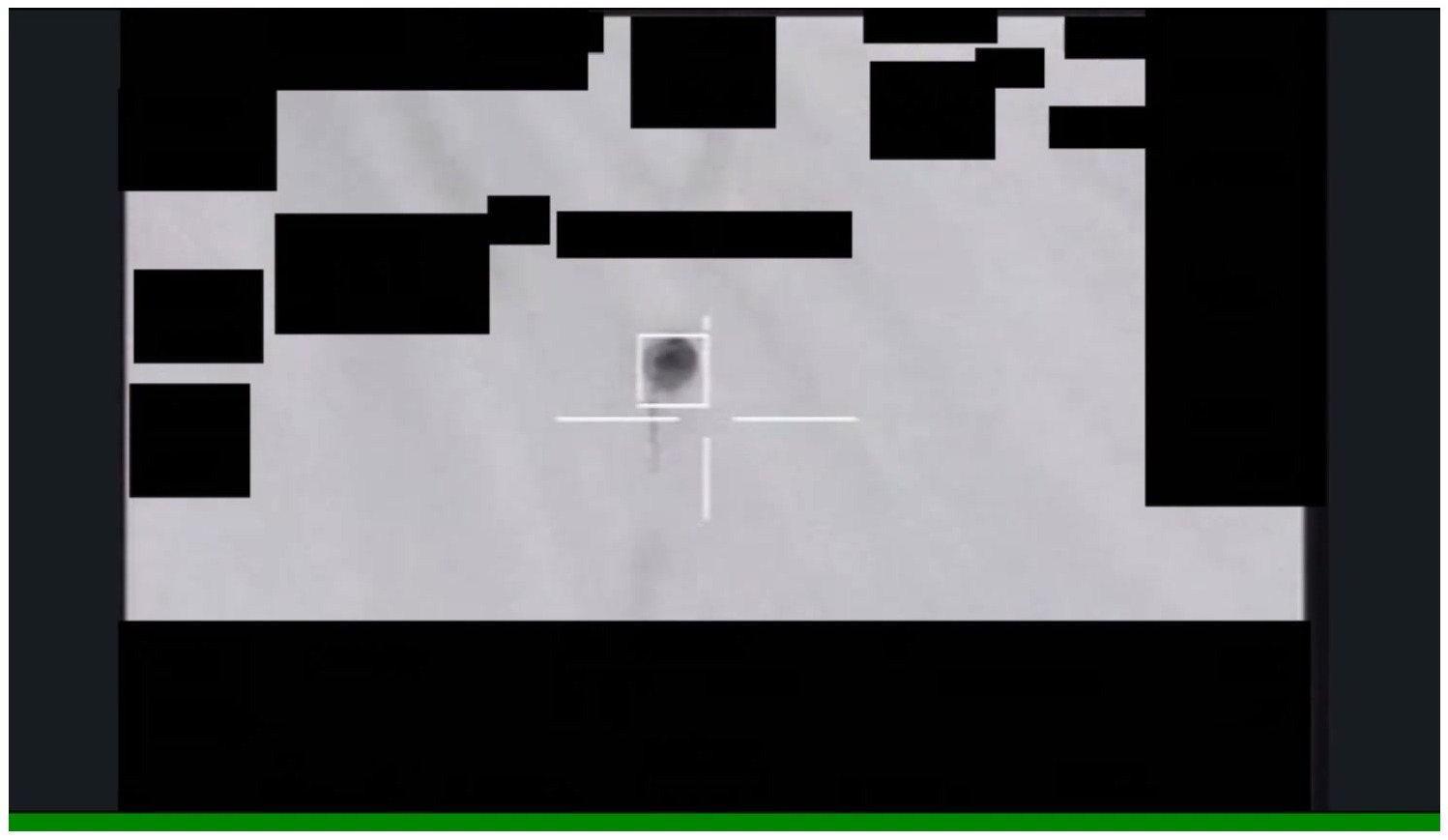
Clips such as DOW-UAP-PR051, the Syrian instant acceleration record, DOW-UAP-PR071, the Lake Huron shootdown-related record, and DOW-UAP-PR098, the Persian Gulf formation record are much easier to share than a dense PDF. Mainstream coverage from outlets such as CBS News, ABC News, and Sky News has understandably leaned on the visual material.
But a video is not a verdict.
Most of these clips arrive without enough public context to support the strongest claims people want to make about them. A viewer may see rapid motion, a strange heat signature, or an object apparently moving in a way that seems difficult to explain. That reaction is valid as a starting point. It is not valid as an ending point.
For a video to become strong evidence, the viewer needs more than the clip itself. They need sensor type, platform position, object range, tracking mode, weather, metadata, original file chain, operator notes, possible friendly or adversary activity, and any later analysis. Without those layers, the responsible conclusion is narrower: this is an officially released unresolved record, not a solved case.
That distinction does not weaken the archive. It protects it.
The wrong way to read Release 02 is to freeze one frame, circle a bright spot, and declare victory. The better way is to compare records across region, year, sensor type, and official description. The video files are not isolated spectacles. They are entries in a wider pattern of military collection, classification, review, and public release.
The Most Important Files May Be the Least Viral
The strongest long-term value in Release 02 may sit outside the videos.
Start with DOW-UAP-D017, UAP Reported at Sandia Base, 1948-1950. This document is not just another old UFO story. It places recurring reports of green orbs, discs, and fireballs near a national security site in New Mexico during the early Cold War. The record points to organized reporting and attempts to think about physical collection, not just witness anecdotes.
That matters because it shows how quickly UAP reports entered military and security channels after the Second World War. The Sandia file does not prove an extraordinary origin. It proves something more grounded and historically useful: officials treated at least some of these reports as worth collecting, organizing, and preserving.
Then there is ODNI-UAP-D001, the senior U.S. intelligence official narrative. This is one of the most compelling records in Release 02 because it reads like a direct experience from inside the national security world. That also makes it dangerous territory for sloppy interpretation.
A senior official’s account deserves attention. It does not automatically become independent confirmation. The narrative should be read as a primary record of reported experience, then compared against other data. Where were the objects? What else was reported in the region? Were aircraft, sensors, or other witnesses involved? What can be corroborated? What remains only a narrative claim?
Release 02 also brings in CIA-UAP-D001, a 1973 USSR intelligence report and Department of Energy records such as DOE-UAP-D001, the PANTEX imagery file. These records are valuable not because they answer the UFO question, but because they widen the institutional map. The archive now touches intelligence reporting, nuclear-adjacent facilities, scientific correspondence, and laboratory communities.
That is a bigger story than a single clip.
Sensitive Sites Create Attention, Not Automatic Answers
UFO discussions have always been drawn to military bases, nuclear facilities, weapons ranges, and restricted airspace. Release 02 adds more fuel to that pattern through Sandia, PANTEX, CIA reporting, and modern operational footage.
This is where readers need the most discipline.
The presence of a UAP-related record near a sensitive site is meaningful. It tells us that the report entered a security-relevant channel or later became relevant to a declassification effort. It may show that military or scientific personnel took the observation seriously enough to preserve it. It may also help researchers find clusters across time and geography.
But sensitive-site proximity is not a conclusion.
There are ordinary reasons unusual observations cluster near restricted or military areas: more sensors, more trained observers, more reporting requirements, more aircraft, more classified activity, and more attention to anything that could threaten a facility. There are also unresolved cases that deserve further study. Both can be true.
This is why Release 02 should be treated as a map of questions, not a folder of answers.
The Sandia and PANTEX records are especially useful for building that map. They connect UAP research to the history of national security institutions. They also show why public archives need careful labels. A record can be official, interesting, and unresolved without being proof of the most dramatic explanation.
NASA Audio Shows Why Context Can Change a File
Release 02 also adds seven NASA audio records. At first glance, that sounds like a dramatic new spaceflight thread. Apollo and Mercury audio naturally pulls readers toward astronaut mystery stories.
But NASA material requires a different reading habit.
Some spaceflight observations that sound strange in isolation may have plausible operational explanations. The Guardian, EarthSky, and Live Science all emphasized caution around treating NASA items as new proof. That caution is warranted.
Still, the NASA audio is not useless just because some items may be explainable. Audio preserves timing, wording, uncertainty, and human reaction. It lets researchers compare what was said in the moment with later summaries, transcripts, mission records, and public interpretations.
That is the proper value of these files. They do not turn the archive into a space-alien dossier. They help build a better primary-source trail.
The Social Layer Is Now Part of the Case
Release 02 is not only a government release. It is a public interpretation event.
On Reddit, researchers and casual readers have been sorting through the files, making video compilations, questioning source chains, and arguing over whether the release is meaningful or underwhelming. A source-control discussion on r/UFOs raised exactly the kind of issues serious archives need to track: whether public videos are renditions rather than native files, whether file counts are cumulative, whether some records lack context, and whether duplicate identifiers appear in the official trail.
Those community claims should not be copied as final facts without verification. But they are valuable because they show what serious readers are hungry for: not just more clips, but cleaner provenance.
This is an important shift. The loudest UFO conversation still rewards dramatic claims. But the most useful part of the community is asking better archival questions:
- What is the source file?
- What was released when?
- What changed after release?
- What is missing?
- What is official, and what is third-party interpretation?
- What would confirm or weaken this claim?
That is where a site like UFO Declassified can be useful.
What Release 02 Demands From a Serious UFO Archive
Release 02 shows that the public does not just need access. It needs structure.
A serious archive should not only list files. It should help readers understand the status of each record. That means separating at least six things:
- The official record: what the government released.
- The event: what allegedly happened.
- The evidence quality: what the public file can actually support.
- The analysis: what has been assessed, explained, or left unresolved.
- The media layer: how journalists and social platforms are framing it.
- The claim layer: what politicians, witnesses, researchers, or influencers are saying beyond the file itself.
If those layers collapse, the archive becomes another rumor engine. If they stay separate, the archive becomes a public research tool.
Release 02 is ideal for this kind of structure because it contains so many different evidence types. The same page model cannot treat a Lake Huron missile engagement, a NASA audio excerpt, a Sandia historical file, a CIA intelligence report, and a Department of Energy image as interchangeable.
Each record needs a plain-language status:
- What is official?
- What is unresolved?
- What context is missing?
- What has been claimed elsewhere?
- What should a reader not conclude yet?
That is not cautious to the point of uselessness. It is the only way the archive can remain credible as more releases arrive.
The Real Meaning of “Unresolved”
The word “unresolved” is doing a lot of work in Release 02.
To believers, unresolved can sound like a government hint. To skeptics, unresolved can sound like a polite way of saying low-quality data. In practice, unresolved means something more limited: based on the available record, the government is not making a definitive public determination.
That can happen for many reasons. The object may be genuinely anomalous. The data may be too poor. The original context may be missing. The explanation may involve classified systems. The file may be a public version of a deeper record that remains unreleased. Or the case may simply be ambiguous.
The honest reading is not “unresolved means alien.” The honest reading is also not “unresolved means nothing.” The honest reading is: unresolved records deserve classification by evidence quality, source context, and what would be needed to evaluate them further.
This is where Release 02 is most useful. It gives the public enough material to ask sharper questions, not enough to stop asking questions.
The Third Release Will Test Whether This System Is Learning
The Department of War says a third release is being prepared. That matters because Release 03 will show whether PURSUE becomes a more mature public archive or simply another round of attention spikes.
The next release should be judged by more than file count. Better questions are:
- Are records easier to verify?
- Are source files and public renditions clearly distinguished?
- Are metadata fields more complete?
- Are corrections and changes visible?
- Are resolved and unresolved cases separated more clearly?
- Are older documents linked to modern records where appropriate?
- Are agencies giving enough context for outside experts to help?
If the answer improves over time, PURSUE could become one of the most useful public UAP archives ever created. If not, it will produce endless viral fragments without enough structure to evaluate them.
Release 02 sits between those possibilities.
The Bottom Line
The second War.gov UFO release is important, but not for the reason most headlines imply.
It does not prove extraterrestrial visitation. It does not make every video extraordinary. It does not turn every NASA audio excerpt into a mystery. It does not settle the debate over what pilots, intelligence officers, astronauts, or military sensors have observed.
What it does is more practical and, in some ways, more important: it gives the public a new body of official records that can be searched, compared, challenged, and improved.
That is the work now. Not belief. Not dismissal. Evidence discipline.
Release 02 should be read as a public archive under construction. Its value will depend on whether readers, journalists, researchers, and government agencies can keep records separate from conclusions and uncertainty separate from hype.
The files are open. The harder part is learning how to read them.