Disclosure Forum 2026: Washington Talked About UFOs for a Day. Here Is What Actually Moved.
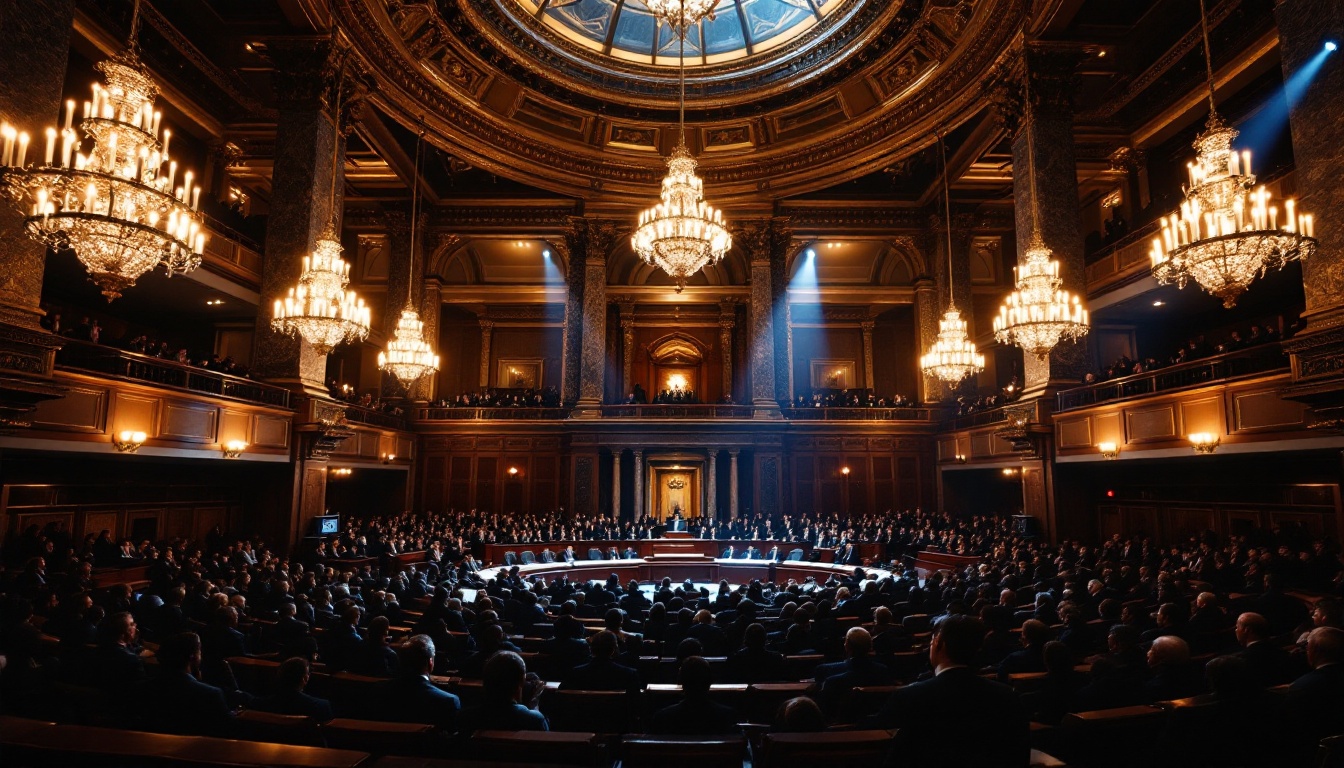
On June 25, 2026, a collection of lawmakers, former defense officials, and scientists gathered in the Kennedy Caucus Room of the Russell Senate Office Building to talk about UFOs for seven and a half hours. The Disclosure Forum, organized by the Disclosure Foundation, a nonpartisan nonprofit, ran from 9 a.m. to 4:30 p.m. It was free, public, and livestreamed on YouTube. It was not a congressional hearing. It had no subpoena power. No one was under oath.
Some things moved. Most things did not. Telling the difference is the entire exercise.
Washington has developed a rhythm around UAP events. Elected officials show up and say serious things. Cable news covers the room. Social media generates a wave of reaction. Then the legislative session resumes, and the structural barriers that have blocked UAP transparency for three consecutive years remain exactly where they were.
This forum followed that pattern in some respects. But it also introduced three specific, verifiable developments that had not existed the day before. Those developments — a confirmed archival tape, an active immunity pipeline, and a renewed legislative commitment — are worth separating from the theater. That separation is the article.
Who Was in the Room
The bipartisan attendance was the forum’s first signal. Six members of Congress appeared across the day’s panels: Senators Kirsten Gillibrand (D-NY) and Mike Rounds (R-SD), and Representatives Anna Paulina Luna (R-FL), Eric Burlison (R-MO), Tim Burchett (R-TN), and Suhas Subramanyam (D-VA).
That is not a fringe delegation. Gillibrand co-authored the UAP Disclosure Act. Rounds co-sponsored it. Luna has been working the executive-branch channel. Burlison and Burchett have been among the most vocal House members on UAP transparency. Subramanyam, a Virginia Democrat whose district includes parts of the defense-intelligence corridor, adds a different kind of credibility — the kind that comes from representing constituents who actually hold clearances.
The expert side of the room included Christopher Mellon, former Deputy Assistant Secretary of Defense for Intelligence under the Clinton and George W. Bush administrations; Rear Admiral Tim Gallaudet, retired; Avi Loeb, chair of the UAP Science Advisory Council; and Mike Gold, former NASA Associate Administrator and Disclosure Foundation board member. These are not anonymous whistleblowers. They are named individuals with documented government careers.
That matters because UAP discourse often struggles with attribution. This forum put names on the record in a public room. It is not the same as testimony under oath. But it is a different kind of evidence than an anonymous claim.
What Moved: The 1952 Washington Tape
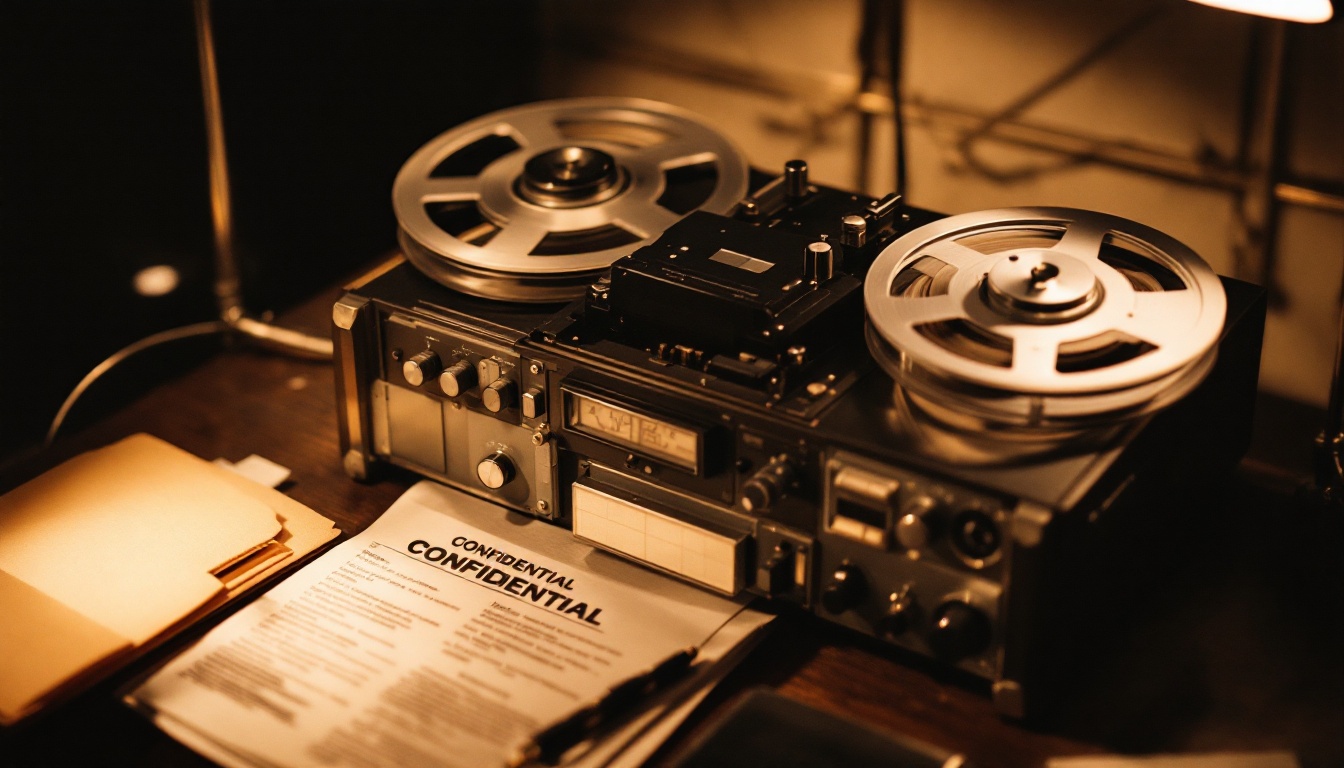
The most specific new development was the announcement by Representative Burlison that a reel-to-reel audio tape exists from 1952, containing a recorded briefing between Air Force officials and scientists about the Washington, D.C. UFO incidents of that July.
The July 1952 Washington sightings are among the most documented UAP cases in American history. Radar operators at Washington National Airport and Andrews Air Force Base tracked unidentified objects on multiple nights. Airline pilots reported visual confirmations. Military jets were scrambled. The Air Force held a press conference — the largest since World War II — and publicly attributed the radar returns to temperature inversions.
That official explanation has been debated for seven decades. What Burlison announced is that a contemporaneous audio record of the internal discussion exists, and that MIT Lincoln Laboratory, the federally funded research and development center that holds the tape, has confirmed its existence and agreed to make it available.
No release date has been announced. “Agreed to make it available” is not the same as “released.” But the confirmation itself is notable. As Jordan Flowers, a researcher who has been tracking the document trail, put it: “He’s stopped asking politely. He knows where certain files are. He’s demanding answers.”
If the tape is released and contains what Burlison described — a candid internal discussion among Air Force and scientific personnel about radar-confirmed unknowns over the nation’s capital — it would be a primary source from the first major wave of official UAP concern. It would not prove what the objects were. It might reveal what the people responsible for explaining them actually believed.
That is a different kind of evidence than another hearing. It is an archival record whose content can be independently evaluated.
It is also, until released, a promise.
What Moved: The Immunity Pipeline
Representative Luna disclosed that she is working with the White House — specifically with Deputy Chief of Staff Stephen Miller — on granting immunity to individuals who claim to possess information about recovered nonhuman technology and alien biological material. Luna’s team, she said, is compiling a list of names to submit to the White House for immunity grants.
This is a procedural development, not a revelation about the material itself. The immunity would protect potential whistleblowers from legal consequences for violating security clearances or the Espionage Act. It addresses a specific structural problem: if individuals with firsthand knowledge of classified UAP programs want to come forward, the legal risk of doing so is a real barrier, regardless of whether their claims are ultimately verified.
The underlying claims remain exactly what they have been since David Grusch’s 2023 testimony: allegations that the U.S. government possesses recovered nonhuman craft and biological specimens. Those claims have not been independently verified. No physical evidence has been publicly produced. The inspector general found Grusch’s complaint “credible and urgent” as a procedural matter — meaning it warranted investigation — but that finding did not evaluate the truth of the specific claims.
What the immunity pipeline changes, if it functions, is the legal landscape for potential witnesses. If people with relevant clearances receive formal immunity, the barrier to disclosure drops. Whether anyone then discloses something that constitutes verifiable evidence remains an open question.
It is striking. It is also thin. An immunity list being compiled is not the same as immunity being granted, which is not the same as someone testifying, which is not the same as evidence being produced. Each step is contingent.
What Moved: The Legislative Signal
Senator Rounds pledged at the forum to revive the UAP Disclosure Act, the legislation he co-sponsored with Senators Schumer and Gillibrand. The bill’s text would establish a review board with authority to compel declassification of UAP-related records, modeled on the JFK Assassination Records Collection Act.
The act has been excluded from the National Defense Authorization Act for three consecutive years. Each year, it passes in the Senate version and is stripped or gutted in conference. The blocking mechanism has been consistent: opposition from defense and intelligence committee members who argue the bill’s declassification provisions are too broad.
Rounds’ pledge to continue matters mainly as a signal of sustained commitment. The bill has not moved forward because of insufficient passion. It has been blocked by structural opposition from members who control the conference process. A renewed pledge does not change that math. It does mean the bill is not dead as a legislative vehicle.
What did change in the FY2026 NDAA, even without the full Disclosure Act, is a conferenced requirement for the Pentagon to brief lawmakers on UAP intercepts by NORAD and U.S. Northern Command since 2004. That is a narrower provision than the full bill would have created, but it is law, not aspiration. It obligates a specific briefing on a specific category of data.
The difference between a pledge and a statute is the difference between the forum’s best moments and its limitations.
What Did Not Move
No new physical evidence was presented at the Disclosure Forum. No classified material was shown. No witness provided testimony that had not already been part of the public record.
The contractor loophole — the theory that sensitive UAP material resides with private defense contractors specifically because such entities fall outside Freedom of Information Act requests — was discussed at length but remains an allegation. Burlison articulated the argument clearly: if UAP programs are compartmentalized across private-sector contractor networks, then no amount of FOIA litigation or congressional inquiry directed at government agencies will reach the relevant material.
This echoes Grusch’s earlier claims about the architecture of concealment. It is a structurally coherent theory. It is also unproven. No one at the forum presented documentary evidence that such a system exists. The argument is inferential: the material is not where it should be, therefore it must be somewhere else, and contractors are the logical somewhere else.
That may be correct. It is not evidence. The distinction matters because the forum’s rhetorical power depended partly on conflating the plausibility of the theory with its verification.
The claim that the U.S. government possesses nonhuman biological specimens — the most dramatic allegation in the UAP discourse — did not advance at the forum. It was referenced. It was not substantiated. After three years of public discussion, it remains exactly where it was: a claim made by a named individual whose complaint was found procedurally credible, but whose specific assertions about recovered material have not been independently confirmed.
The Science Panel
Avi Loeb chaired the forum’s science panel, and his contribution was notably different in character from the legislative and policy discussions. Loeb has been advocating for systematic scientific investigation of UAP through the Galileo Project, and his prepared remarks at the forum focused on methodology rather than revelation.
His core argument: “Attention to anomalies is the best path for gaining new knowledge.” The statement is a philosophy-of-science position, not a UFO claim. Loeb emphasized that the quality of publicly available UAP data remains low, and that interpretation of ambiguous data is premature. He noted that recent orb detections — including those documented in the PURSUE Release 03 files — do not behave like conventional drones but require more research before any conclusions can be drawn.
Loeb also addressed the exotic-physics theories that circulate in UAP discussions — warp drives, extra dimensions, novel propulsion systems. His position was clear: these hypotheses face experimental contradictions and should not be treated as explanations until the observational data demands them. The standard scientific sequence applies. Collect data. Characterize anomalies. Exhaust conventional explanations. Only then consider exotic ones.
He cited a notable statistic: the presidential UAP files released through the War.gov portal since May 8 have received 1.5 billion views. Public interest is not the bottleneck. Scientific infrastructure is.
The science panel’s value was not in what it revealed but in what it modeled. In a room full of political actors making claims of varying verifiability, Loeb’s contribution was to insist on the difference between interesting and proven. That distinction is not exciting. It is necessary.
Why This Forum Was Different — and Why It Was Not
Previous UAP events in Congress have been testimony-driven. The 2023 hearings featured Grusch, David Fravor, and Ryan Graves describing personal experiences or relaying secondhand claims. The emotional and narrative power of those hearings was high. The evidentiary yield was limited.
The Disclosure Forum was structured differently. It was policy-focused, organized around legislative strategy, executive-branch engagement, and scientific methodology. The question was not “what did you see?” but “what are the institutional mechanisms for getting information released?” That is a less dramatic question. It is also a more productive one.
Mike Gold, the former NASA Associate Administrator, captured the forum’s aspirational register when he said: “We are now in the age of disclosure.” The statement reflects a real shift in the political environment. Polling cited at the forum showed that nearly 90 percent of both Republicans and Democrats want the government to release more UAP information. Bipartisan public demand for transparency is not in dispute.
But public demand has been high for years. What converts demand into action is legislative power, and on that front, the forum revealed the same asymmetry it has revealed before: broad support in theory, structural blockage in practice. The UAP Disclosure Act has majority support in the Senate. It cannot survive conference. That is not a public-opinion problem. It is a committee-power problem.
The forum was different because it focused on the machinery. It was not different because it changed the machinery.
The Skeptic’s Question
There is a version of the UAP disclosure story in which the push for transparency is itself a managed narrative. Some researchers have suggested that the disclosure movement — the hearings, the forums, the legislative activity, the gradual release of files through War.gov — may function as a form of controlled misdirection: enough activity to sustain public interest, not enough substance to actually resolve the core questions.
This is sometimes called the “dead end plot” theory. In this framing, the government is not concealing UAP information because the information is too dangerous to release. It is allowing a disclosure process to unfold because the process itself, with its endless sequence of almost-revelations, serves as a more effective coverup than silence would.
The theory is unfalsifiable in its strong form, which limits its analytical value. But its weaker form — the observation that disclosure activity can substitute for disclosure itself — is worth holding in mind. A forum where lawmakers pledge action is not the same as action. A tape that is confirmed to exist is not the same as a tape that is released. An immunity list being compiled is not the same as testimony being given.
The question is not whether the people at the forum were sincere. Most appeared to be. The question is whether sincerity, in the absence of institutional power to compel disclosure, produces anything other than more forums.
Bottom Line
Three things moved at the Disclosure Forum on June 25, 2026.
First, a 1952 reel-to-reel tape of an Air Force briefing about the Washington, D.C. UFO incidents was confirmed by MIT Lincoln Laboratory to exist, and the laboratory has agreed to make it available. This is a verifiable archival development. Its significance depends entirely on what the tape contains and when it is released.
Second, Representative Luna disclosed an active process to grant immunity to potential UAP whistleblowers through the White House, with a list of names being submitted. This is a procedural development that could lower the legal barrier to testimony. It has not yet produced testimony.
Third, Senator Rounds committed to reviving the UAP Disclosure Act, and the conferenced FY2026 NDAA does require Pentagon briefings on UAP intercepts since 2004. The full Disclosure Act remains blocked for the third consecutive year.
What did not move: no new evidence was presented. The contractor loophole remains an allegation. The claim of recovered nonhuman biological specimens remains unverified. The structural barriers to legislated disclosure — committee opposition in conference — remain intact.
The forum was better than a hearing in one specific way: it asked institutional questions instead of testimonial ones. It was limited in the same way every UAP event without subpoena power is limited: it could advocate for transparency but could not compel it.
The gap between what was discussed and what was demonstrated is the gap that has defined UAP disclosure for three years. The Disclosure Forum did not close that gap. It may have made it slightly more visible.
That is worth something. It is not yet worth what the participants are promising.
Sources
Official and primary sources:
- War.gov/UFO — Presidential Unsealing and Reporting System for UAP Encounters
- Disclosure Forum 2026 — Disclosure Foundation
- S.Amdt.3111 — UAP Disclosure Act of 2025, 119th Congress
- Sen. Gillibrand — Statement on Release of UAP Files
Reporting on the Disclosure Forum:
- NewsNation — UFO Transparency Takes Center Stage at Disclosure Forum (June 25, 2026)
- The Hill — ‘Invasion of Washington’ UFO Tape May Surface as Lawmakers Push Release
- TodayWhy — Disclosure Forum 2026: Why It’s a UAP Turning Point
- IBTimes — Bipartisan UFO Forum Set to Expose Pentagon’s Secret Contractor Loophole
- IBTimes — UAP Expert Urges Government to Provide Whistleblowers Legal Protection
Legislative and policy context:
- The Disclosure Era — UAP Disclosure Act Stalls Again: UAPDA Excluded from FY2026 Defense Bill
- DefenseScoop — Congress Wants to Know More About Military’s UAP Intercepts
- NewsNation — UFO Researcher Suggests Disclosure Push May Be Latest Coverup
Expert analysis:
Related UFO Declassified coverage: